This guide takes UNE-EN 1627 at its word and explains what really separates an RC2 window from an RC3 one: which tools the test uses, how many minutes each class has to hold out, and what glass UNE-EN 356 demands. It also settles the question that stops almost every villa owner in their tracks: how to protect the openings and still air the house at night without covering the façade in bars.
In this article
- What UNE-EN 1627 actually measures (and what it does not)
- RC2 versus RC3: what actually changes
- The second layer: P4A glass to EN 356
- No bars, and still ventilation: how it is really solved
- Where an RC2 window fails: nearly always in the installation
- So, RC2 or RC3 for your villa?
- The key facts, one line each
- Frequently asked questions
There is a conversation that repeats itself almost word for word on every site visit to a villa on the Costa del Sol. The owner wants to sleep soundly while the house sits empty for three weeks. The same owner wants floor-to-ceiling glazing, the evening breeze off the sea and not a single bar that recalls an eighties bank branch.
For a long time those two wishes were treated as incompatible, and the market settled the conflict the quick way: wrought iron on the outside. That is no longer necessary. The standard UNE-EN 1627 classifies windows and doors by their burglar resistance, and UNE-EN 356 does the same for the glass. Together they produce a glazed opening that holds out against hand tools for minutes on end without changing the look of the façade.
So the practical question is no longer «bars or no bars». It is RC2 or RC3. And the answer turns on very concrete things: whether the ground floor can be reached from the street, how long the estate's security takes to arrive, how many months a year the house stands closed.
What UNE-EN 1627 actually measures (and what it does not)
The version in force in Spain is UNE-EN 1627:2021, published on 29 December 2021, which annuls and replaces the 2011 edition. It defines burglar resistance as the ability of a product to resist attempts at forced entry «using physical force and with the aid of predefined tools». Those last words carry the whole idea: the test is not run against an imaginary burglar but against a closed list of tools and a stopwatch.
The classification rests on three laboratory tests, each with its own standard:
- UNE-EN 1628 — resistance under static loading. A sustained force is applied at the critical points of the frame and the sash.
- UNE-EN 1629 — resistance under dynamic loading. A standardised impact body is dropped against the sash from the height laid down for each class. It is required only for classes RC1 to RC3.
- UNE-EN 1630 — resistance to manual burglary attempts. This is where a technician, holding the tool set for that class, genuinely tries to get the window open.
The manual test has one feature that surprises people: it runs in two phases and on two specimens. The first specimen is used for preliminary trials that locate the product's weak points. On the second, now knowing exactly where to attack, the main test is carried out on those vulnerable zones. The exam cannot be passed by luck: the attacker knows the window's weak spot in advance.
What the standard does not cover deserves saying just as plainly. UNE-EN 1627 assesses the attack on the structure of the opening. It does not cover picking locks and cylinders, nor targeted attacks on the electronics of a motorised lock. For security doors from class 3 upwards there is also the Spanish national standard UNE 85160, which adds criteria for the lock, the cylinder and the escutcheon.
Eight classes, not six
Almost every catalogue talks about «six classes, RC1 to RC6». The standard in fact sorts products into eight: RC1, RC1 N, RC2 N, RC2, RC3, RC4, RC5 and RC6. The «N» means there is no class requirement for the glazing, and that single letter changes the value of a quotation completely, as we will see.
The classes are grouped by the profile of the offender. The first three describe the casual, opportunist burglar: he acts because an opportunity appears, has no idea what is inside, avoids noise and is in a hurry. Classes 4 to 6 describe the professional, who arrives informed, with power tools and no fear of noise. For a detached house, 95 % of decisions are played out between RC2 and RC3.
RC2 versus RC3: what actually changes
RC2: a screwdriver and three minutes
The class 2 offender tries to get in with simple tools: a screwdriver, pliers, wedges and, where hinges or grilles are exposed, small hand saws. In the UNE-EN 1630 test that becomes tool set A2, which adds to the basic A1 set (screwdrivers, spanners, pliers, knife, hooks, rubber mallet) a pipe wrench, plastic and wooden wedges, hand saws and steel extension tubes for leverage.
The window has to hold out for a resistance time of 3 minutes, within a total test time of 15 minutes.
That distinction matters, because it is constantly misread. Resistance time is not how long the test lasts on the clock: it is the operator's actual working time measured without pauses, inspection or preparation. Three minutes of continuous levering at the same point is a great deal more than it looks on paper.
Is that enough? For the vast majority of cases it is, and the reason lies in how a window is actually breached. According to figures from the German Federal Criminal Police Office (BKA), quoted in industry technical presentations by ift Rosenheim, 81 % of intrusions through a window are carried out by levering the sash open between frame and sash. These are German figures, not Spanish ones, but the mechanics of the attack and the EN 1627 standards are common across Europe, so they serve as an order of magnitude. That levering is precisely the attack RC2 is designed to defeat, and the opportunist who is not inside within the first two or three minutes moves on to another house.
RC3: enter the crowbar
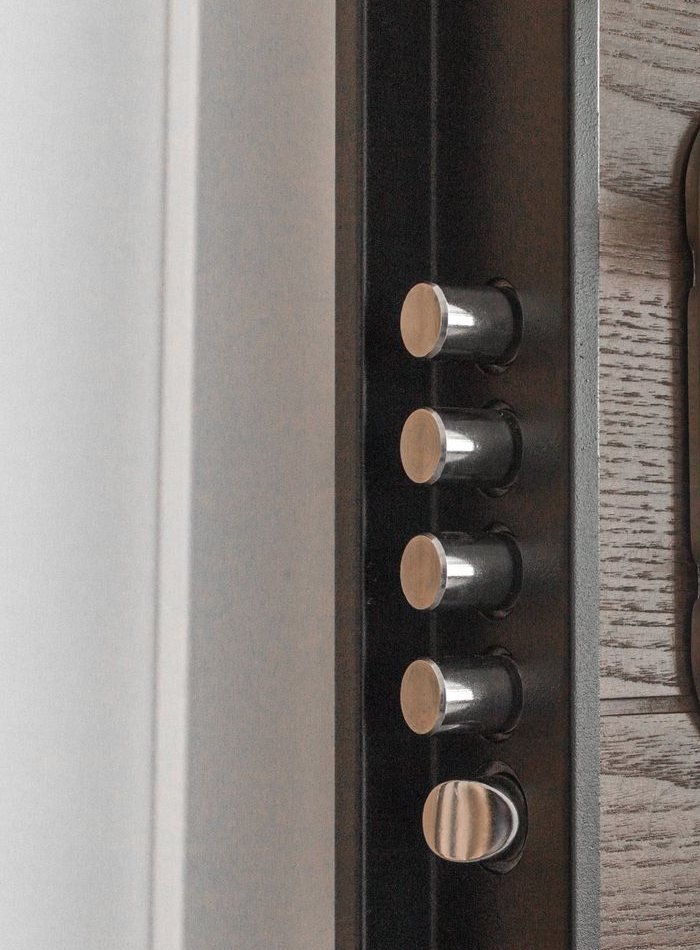
The step up to RC3 is not «the same thing, only stronger». The tool changes. The class 3 offender adds a wrecking bar (crowbar), a second screwdriver, a small hammer, punches and a hand drill. That is tool set A3, and the long bar multiplies the leverage at the sash-to-frame joint in a way no screwdriver can match.
The resistance time rises to 5 minutes, and the total test time to 20.
The glass requirement changes too, from P4A to P5A. And here is a detail almost nobody mentions: the cylinder does not change. Table 2 of UNE-EN 1627:2021 itself, the one on key-related security, calls for the same grade 4 in digit 7 of UNE-EN 1303:2015 for RC1, RC2 and RC3, and only raises it to grade 6 from RC4 upwards. The real difference between the two classes lies in the structure: profile reinforcement, the number and geometry of the locking points, how the hardware is anchored and the resistance of the glass.
RC2 versus RC3 at a glance
| RC2 | RC3 | |
|---|---|---|
| Offender profile | Casual burglar, avoids noise and risk | Determined burglar, accepts more noise and more time |
| Tools (EN 1630) | Set A2: screwdriver, pliers, wedges, hand saws, extension tubes | Set A3 = A2 + crowbar, second screwdriver, locksmith's hammer, punches, hand drill |
| Resistance time | 3 minutes of actual working time | 5 minutes of actual working time |
| Total test time | 15 minutes | 20 minutes |
| Minimum glass (EN 356) | P4A | P5A |
| Cylinder (EN 1303, digit 7) | Grade 4, per Table 2 of EN 1627:2021 | Grade 4: the same requirement as RC2 |
| Dynamic loading test | Yes | Yes |
| Typical application | Detached villa on a gated estate, ground floor and balcony doors; the sensible default | Isolated or high-value house, easy access from a public road, long empty spells, high insured contents |
On price. We do not publish a figure here for the extra cost of RC3 over RC2, because no reliable aggregate data exists: it depends on the profile system, the size of the opening, the type of opening and the glass, and the numbers circulating online contradict one another. What can be said in qualitative terms is that moving from a good standard window to RC2 is usually a manageable increase within the joinery budget, whereas the step from RC2 to RC3 is proportionally larger, because it drags in a reinforced profile, more locking points and a higher glass class. The practical conclusion: fitting the whole house to RC2 almost always pays off better than fitting two openings to RC3 and leaving the rest unclassified.
The second layer: P4A glass to EN 356
This is where the most expensive conceptual mistake in the field is made. Many owners believe that «RC2» and «safety glass» are the same purchase. They are not. They are two distinct layers of one system, and the standard treats them separately on purpose.
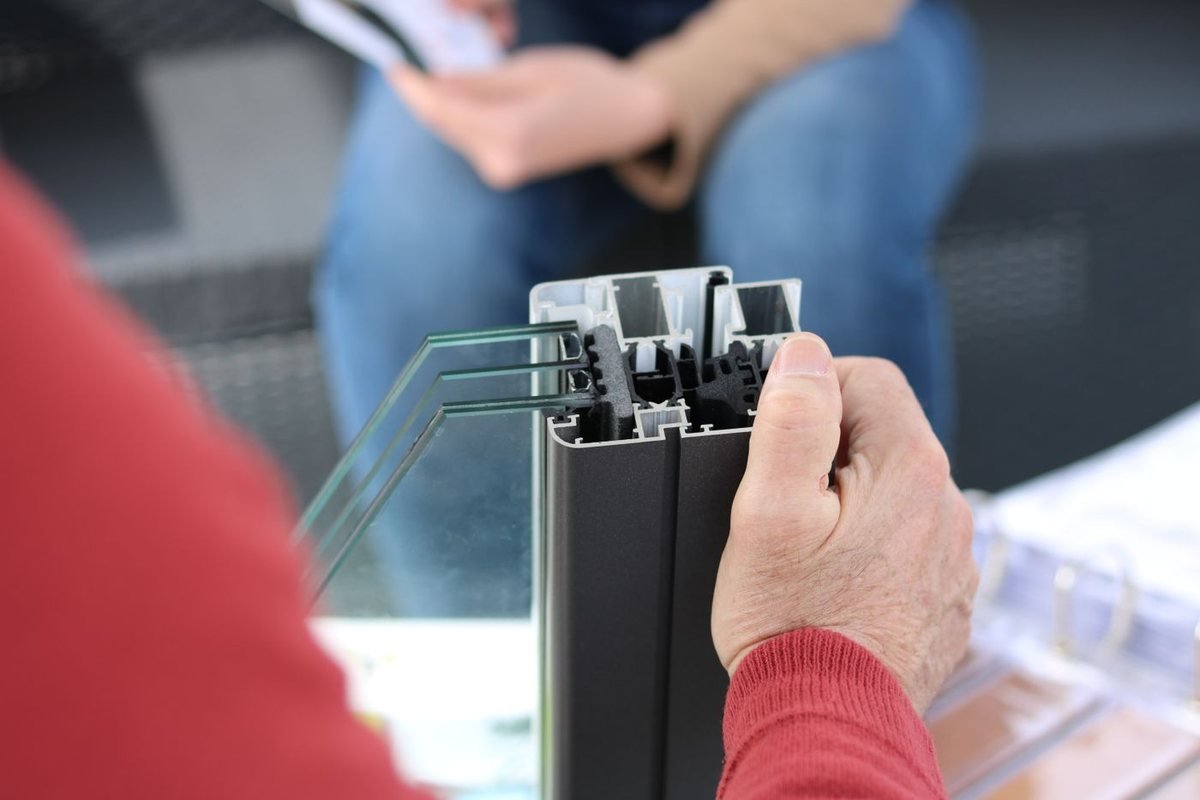
UNE-EN 1627 assesses the assembly: frame, sash, hardware, locking points, anchoring into the structure. The ability of the glass to withstand an attack is proven by its own classification to UNE-EN 356, with its own separate test certificate. That is why the standard includes a table of minimum glazing requirements:
| Product class | Minimum glass class (EN 356) |
|---|---|
| RC1 | P2A |
| RC1 N | No requirement |
| RC2 N | No requirement |
| RC2 | P4A |
| RC3 | P5A |
| RC4 | P6B |
| RC5 | P7B |
| RC6 | P8B |
Where several panes are used, as in an insulating glass unit, it is enough for one of them to meet the required class. The standard then allows the tested pane to be replaced by one of equal or higher class, provided the retention system remains identical to the one tested. That last proviso is what separates a correct installation from an expensive botch.
How a P4A is tested
Group A of EN 356 measures resistance to hard-body impact. A 4.11 kg steel ball is dropped vertically onto the glass specimen, and after each impact the pane is checked for perforation. What separates the classes is the drop height and the number of impacts:
- P1A — 1.5 m, 3 impacts
- P2A — 3 m, 3 impacts
- P3A — 6 m, 3 impacts
- P4A — 9 m, 3 impacts
- P5A — 9 m, with the procedure repeated three times: 9 impacts in total
Nine metres is the height of a third floor. A P4A takes that impact three times without the ball going through. In practice, laminated glass of this class can craze across its whole surface and still remain a physical barrier: the PVB interlayer holds the fragments in the frame.
Group B, from P6B upwards, drops the ball and uses an axe and a hammer, and counts how many blows it takes to open a square hole 400 mm on each side: 30 to 50 blows for P6B, 51 to 70 for P7B, more than 70 for P8B. These levels are meant for banks, jewellers and sensitive facilities, not for a home.
Why glass alone is not enough (and hardware alone is not either)
Put it in terms of a real attack. If the weak point is the hardware, the burglar never touches the glass: he levers between sash and frame and has the window open in fifteen seconds, quietly and without cutting himself. The most expensive P4A on the market plays no part in that sequence.
If the weak point is the glass, the reverse happens: the hardware holds, but one sharp blow opens the pane and the attack carries on through the hole, or simply lets an arm through to turn the handle from inside.
That is why the standard requires both at once, and why the data sheet of a serious RC2 window always comes with two certificates: one for the assembly to EN 1627 and one for the glass to EN 356.
A warning: the laminated glass required by the Spanish building code is not anti-burglary glass
Spain's building code, section CTE DB-SUA 2, requires safety glass in areas at risk of impact, and that glass is classified to UNE-EN 12600. Its purpose is a different one: to prevent cuts and falls from height when the glass breaks by accident. A house complying with the code is nowhere near proof that its glass is class P4A. Different tests, different aims, even though the base material goes by the same name: laminated glass.
No bars, and still ventilation: how it is really solved
We have reached the point where most articles on this subject cheat, so let us start with the uncomfortable fact.
The class is declared for one specific secured condition
EN 1627:2021 says so in as many words: «the test specimen shall be in the secured condition defined by the manufacturer». Translated: the RC2 class of your window is valid in the closing position that was tested, which for the vast majority of products on the market means closed and locked. A conventional tilt-and-turn window left in the tilt position overnight is not covered by its RC2 certificate, however expensive the hardware was.
Now the good part, and it is the part almost nobody in Spain talks about.
The same clause goes on: «a product offering burglar resistance at more than one secured condition can be tested, assessed and classified at each condition». The standard therefore explicitly allows a window to be certified in the ventilation position as well.
Hardware that holds RC2 in the tilt position
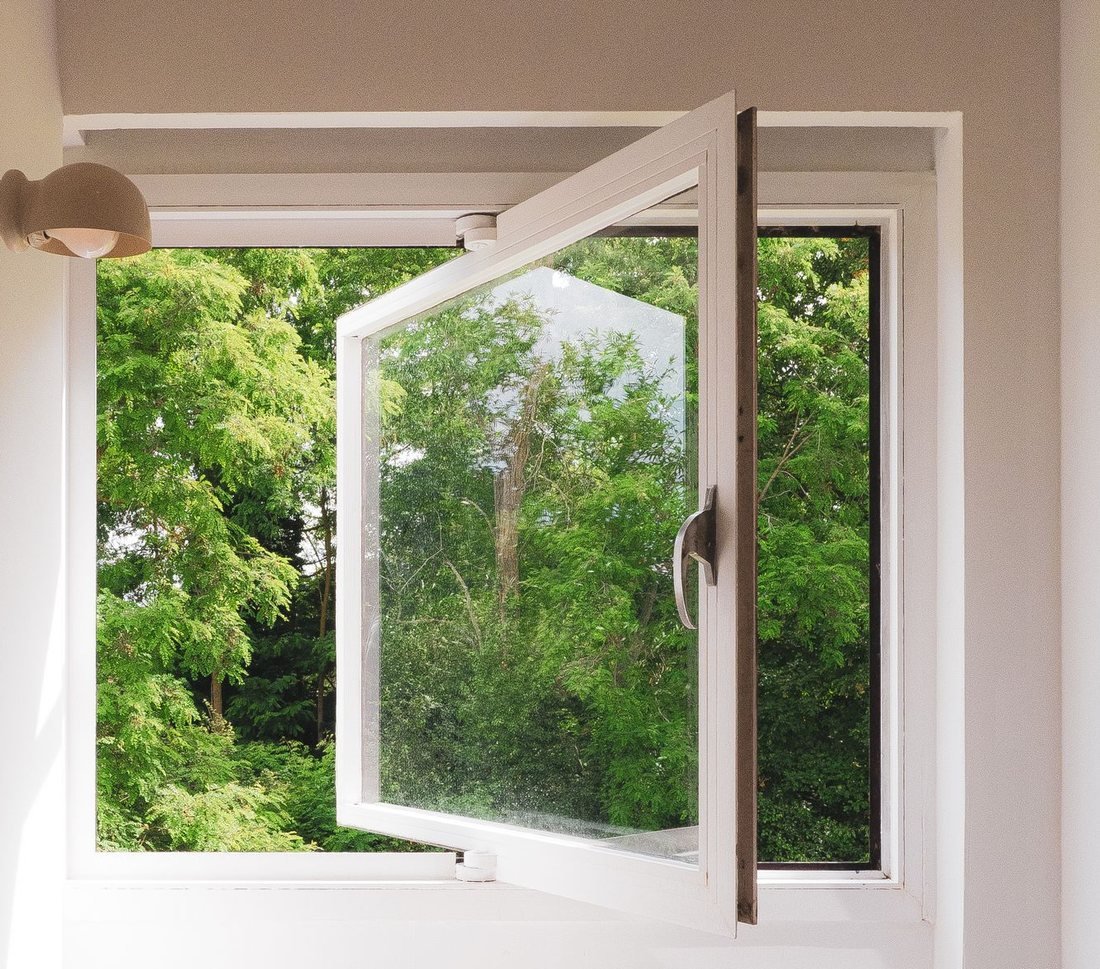
This already exists as an industrial product. The hardware system Schüco AvanTec SimplySmart OpenSecure, which works on a tilt-before-turn basis (tilt first, turn second), is tested and certified by ift Rosenheim to EN 1627 in resistance class RC2 in the tilt position. The vent tilts open by up to 175 mm, with no restriction on the ventilation cross-section, and stays locked throughout; a key is needed to release the fully open position.
Five security components do the work: retaining arms that hold the vent in the tilt position, stops that regulate the opening width, and inserts that protect exposed screw heads from tampering.
That is, today, the clean technical answer to «I want to air the house at night and I do not want bars». It is not a marketing trick: it is a second secured condition tested in a laboratory.
The other routes, in order of good sense
- Controlled mechanical ventilation with heat recovery. The most elegant of the lot: the house is ventilated with the windows closed and locked, which is exactly the position in which the RC class holds. It also filters out pollen and Saharan dust, which on the Costa del Sol is appreciated more than people expect.
- Key-lockable handle. A de facto requirement in RC2 joinery: it stops the handle being turned from outside through a hole drilled in the profile, or with the window in the tilt position. The standard also calls for drill protection around the gear, with a minimum surface hardness of 60 HRC.
- Self-locking roller shutters. Done properly, they add resistance in the RC3 to RC4 range. One non-negotiable condition: the guide rails must be recessed into the structure. Fitted on the surface instead, a single lever is enough to deform the rail and pop the curtain out sideways, and the whole outlay evaporates.
- Integrated ventilation grilles. The standard accepts products with built-in grilles within the scope of the classification, provided they formed part of the tested assembly.
Where an RC2 window fails: nearly always in the installation
A certified window badly anchored is an uncertified window. The class is declared for the installed assembly, which is why EN 1627 devotes a whole annex (Annex A, informative) to what the manufacturer's installation manual should contain.
It is worth being clear about that: the exact anchoring figures are not set by the standard, they are set by each system in its technical documentation, and those are the figures the installer has to respect for the certificate to remain valid. As an order of magnitude, an example of RC2 installation instructions reproduced in the technical guide on burglar resistance published by the Guadalajara College of Building Engineers works with values of this kind:
- Anchor embedment depth: around 60 mm in hollow ceramic brick, 40 mm in solid brick and 30 mm in reinforced concrete.
- Spacing between fixings: no more than about 700 mm, with the distance to the corner under 150 mm.
- Joint between frame and wall: about 15 mm at most.
- Overlap between sash and frame: 12 mm ± 1 mm.
- Glass packed at every locking cam as well, so the sash cannot deflect towards the edge of the pane.
- Glazing bead bonded to the sash along its whole length, with a clean bond line. This is the detail that stops the glass being lifted out from outside without breaking it.
These numbers should be read for what they are: a typical reference, useful above all for knowing what to ask about. The document that governs is always the manual of the specific system being installed in your house.
On top of this come the mushroom-head locking cams paired with security striker plates in the frame, fixed with special-hardness screws and distributed around the whole perimeter of the window, not just on the handle side.
If a quotation for «RC2 windows» mentions neither the anchoring nor the glazing bead, what you are buying is hardware, not a resistance class.
So, RC2 or RC3 for your villa?
RC2 is the right default choice for a villa on a gated estate, where the ground floor is not directly reachable from the public road and the house is lived in regularly. It defeats the real attack, levering with a screwdriver, and it lets you cover every opening, which is what actually cuts the risk.
Move up to RC3 when several of these conditions apply at once:
- An isolated plot, no neighbours in sight and planting that hides the rear façade.
- Openings reachable from a boundary wall, a low roof or a side street.
- The house stands empty for months at a time.
- High-value insured contents, or a policy that requires mechanical protection to be evidenced.
- There is no private security with a short response time.
And one rule that saves grief: the class is set by the weakest opening. A façade with RC3 windows and an unclassified garage door has the resistance of the garage door. Plan the whole perimeter first and choose the class afterwards, not the other way round.
The key facts, one line each
- The standard in force in Spain is UNE-EN 1627:2021, which replaced the 2011 edition on 29 December 2021.
- The classification covers eight classes: RC1, RC1 N, RC2 N, RC2, RC3, RC4, RC5 and RC6.
- RC2: 3 minutes of resistance time, tool set A2, minimum glass P4A.
- RC3: 5 minutes of resistance time, set A3 (crowbar included), minimum glass P5A.
- Resistance time is the operator's actual working time, not the total duration of the test.
- According to German BKA figures quoted by ift Rosenheim, 81 % of window intrusions are carried out by levering between frame and sash.
- P4A (EN 356): a 4.11 kg steel ball, three impacts from 9 metres, no perforation.
- The RC class is valid in the secured condition that was tested; a product can be certified in more than one, the ventilation position included.
- In the province of Málaga, burglaries of homes involving forced entry fell by 23.9 % in 2025 (2,408 offences against 3,163 in 2024), according to the crime figures published by Spain's Ministry of the Interior.
If you are weighing up the glazing for a villa on the Costa del Sol and want to work out which class suits each opening in the façade, take a look at our solutions for homes.