And here another common mistake arises when choosing:
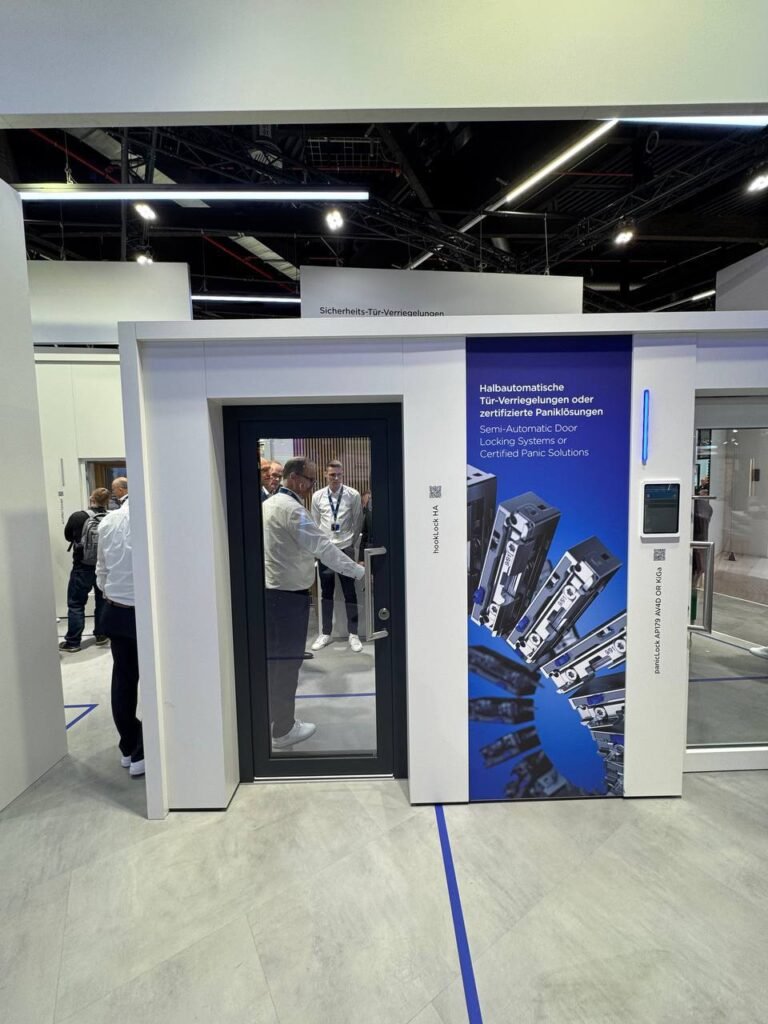
👉 most people do not take security systems into account at the stage of selecting windows and doors
As a result:
basic solutions without protection are installed
there is no integration with the home system
everything has to be modified after installation
And this is always more complicated, more expensive, and less efficient.
Smart glazing: privacy and comfort at a new level
In Fensterbau Frontale in 2026, increasing attention is being paid not only to the construction of windows but also to the functionality of the glass.
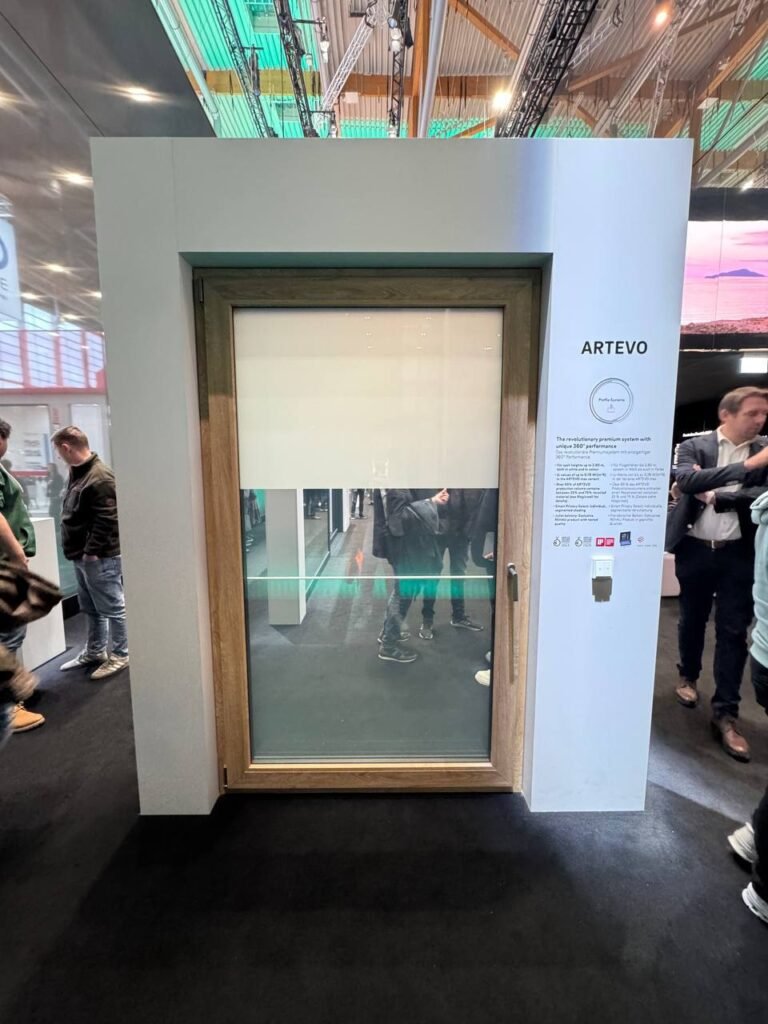
In this example, a solution with adjustable transparency is presented: part of the glass can change its level of tinting, providing privacy without the use of curtains or blinds.
These technologies are especially relevant for:
homes with panoramic glazing
villas with pool access
high-density development projects
commercial spaces
The main advantage is the ability to control light and privacy levels without additional elements, while maintaining architectural purity.

And here it is again clearly visible how much the approach to glazing is changing:
👉 the window is no longer just glazing, but a functional element of the space
It affects not only heat and light, but also:
level of privacy
comfort within the space
the appearance of the interior and facade
Integrated solar protection systems: blinds inside the glazing
At the trade fair Fensterbau Frontale in 2026, it is increasingly common to see solutions where solar protection systems are integrated directly into the glazing.
In this example, the blinds are located between the glass panes, completely eliminating the need for traditional curtains or external systems.
This approach offers several advantages at the same time:
solar protection without additional elements
no dust or dirt on the blinds
minimalist appearance
ease of control
This is especially relevant for modern homes with panoramic glazing, where it is important to maintain clean architecture without unnecessary details.

It is important to understand that such solutions require precise selection and integration at the design stage.
👉 it is not an element that can be “added later”
If these systems are not planned from the beginning:
external solutions will have to be used
the facade design is altered
the overall level of comfort decreases
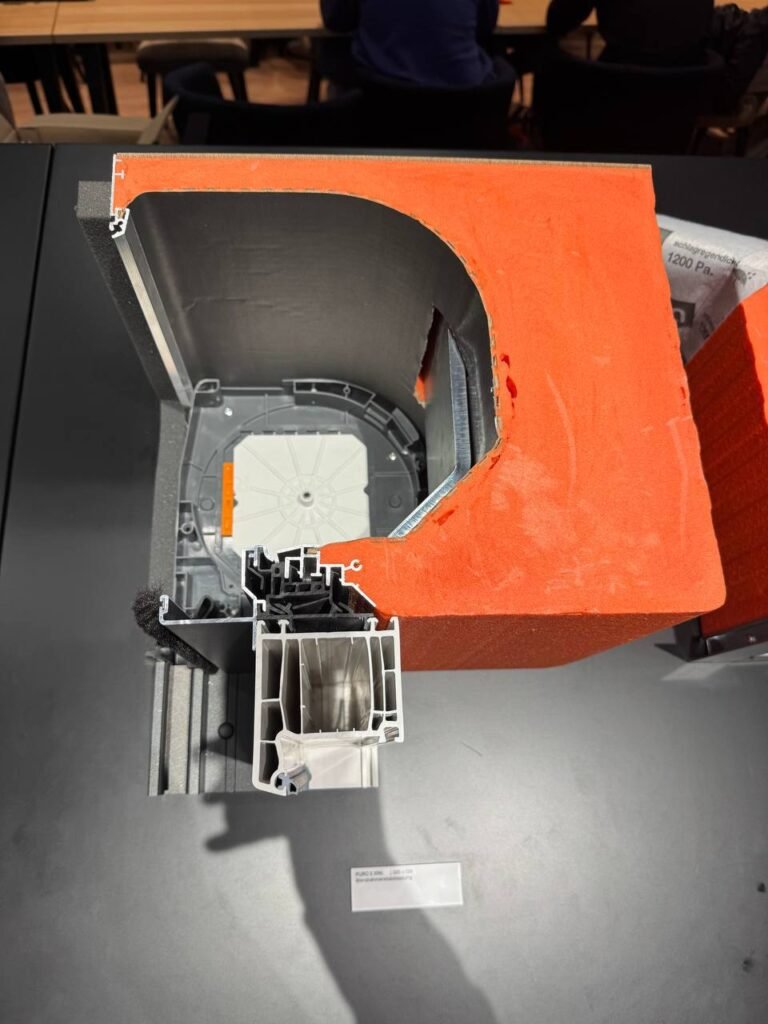
Installation and connection details: where real quality is defined
At the trade fair Fensterbau Frontale in 2026, special attention is paid not only to the window systems themselves, but also to how they are integrated into the building structure.
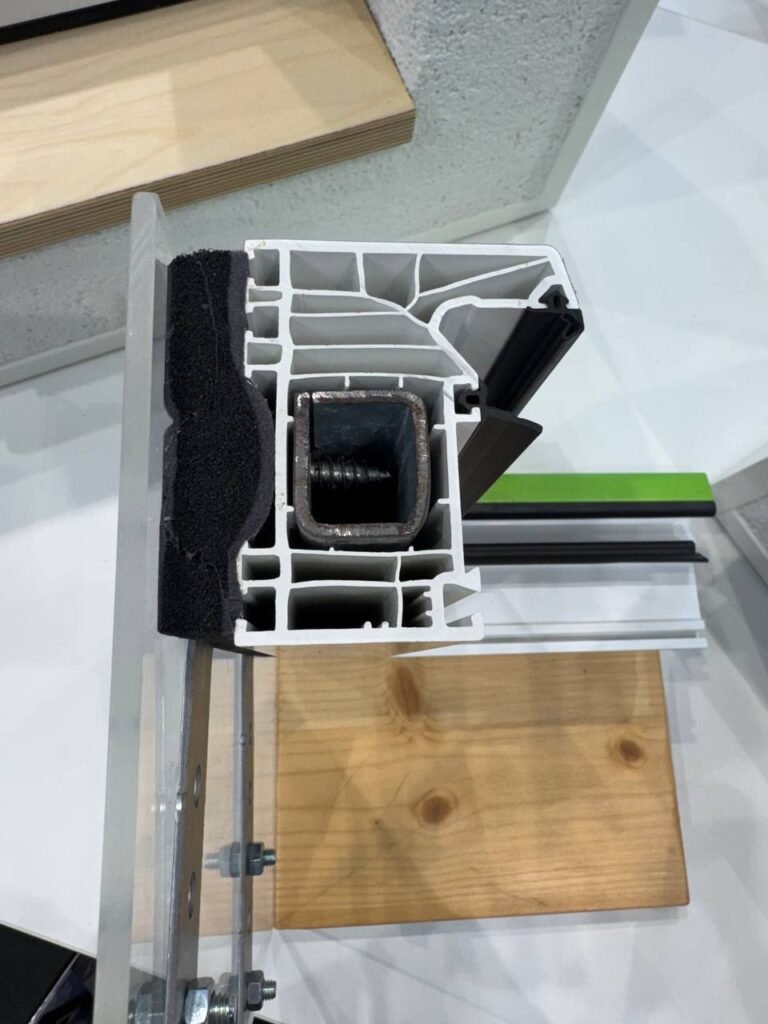
The image shows a connection detail—one of the most critical elements, on which thermal insulation, airtightness, and the service life of the entire system directly depend.
This is exactly where problems most often arise:
thermal bridges
air leakage
condensation formation
structural deformation
It is important to understand that even the most expensive window will not function properly if the installation detail is executed with errors.
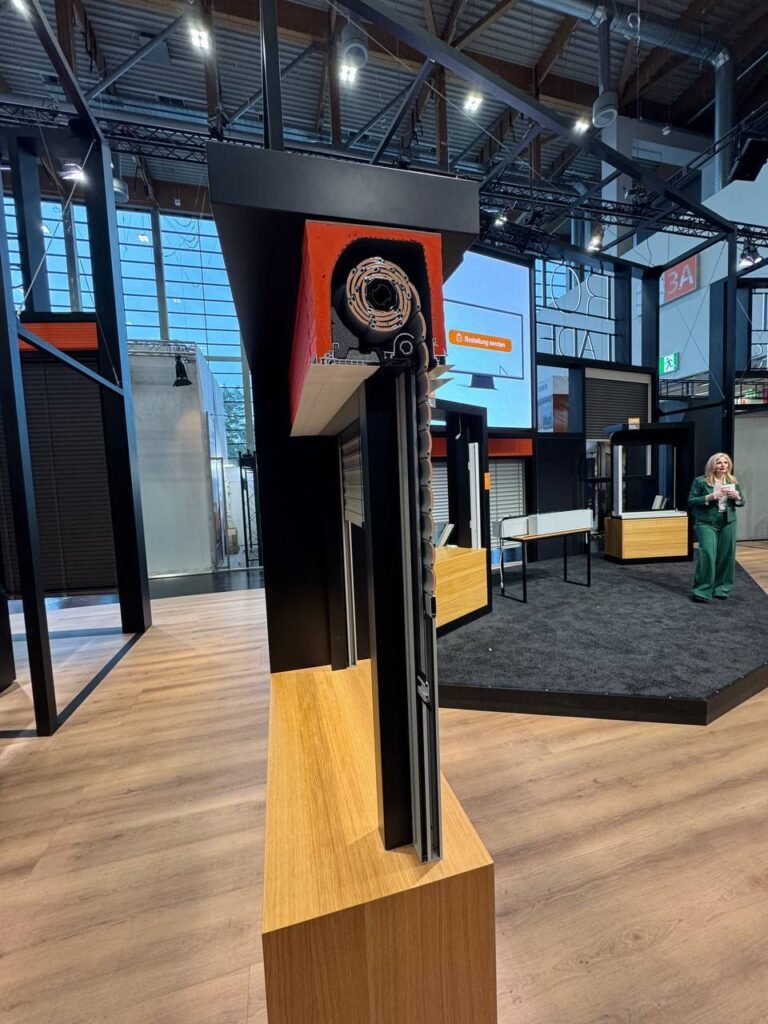
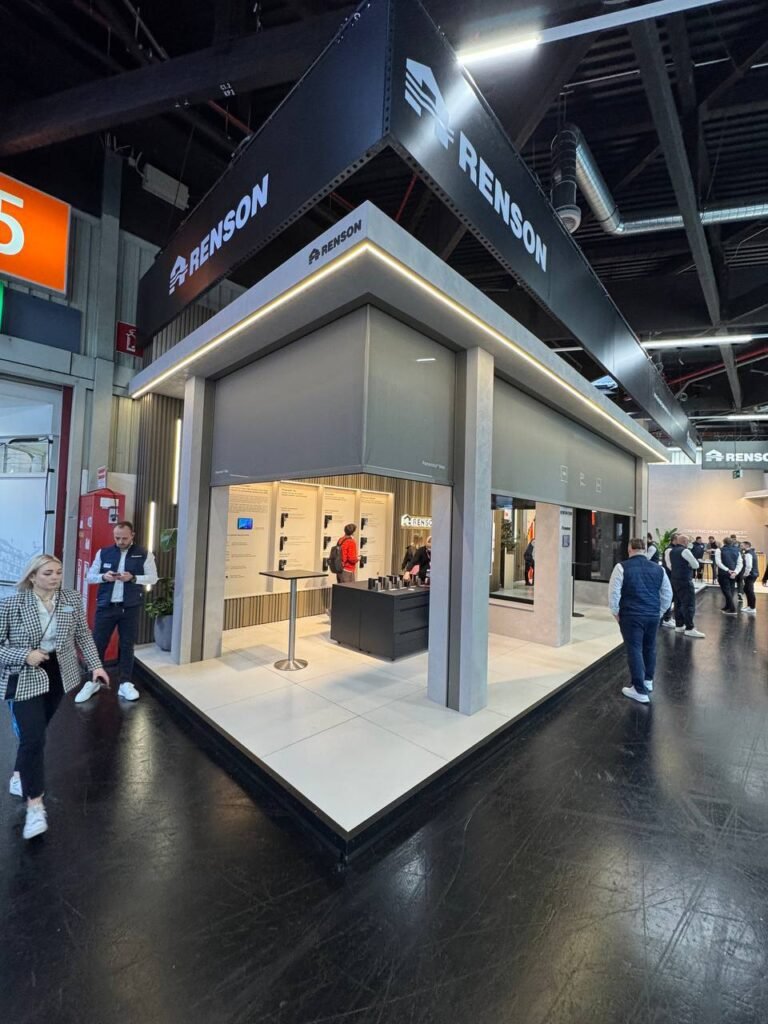
Concealed solar protection systems: integration of roller shutters into the structure
At the trade fair Fensterbau Frontale in 2026, solutions are активно presented in which solar protection is not added separately but is integrated into the window structure from the very beginning.
In this example, a system with integrated roller shutters is shown, which are concealed within the upper part of the structure and do not affect the appearance of the facade.
This approach offers several advantages at the same time:
protection against the sun and overheating
improved thermal insulation
additional security
absence of visual “noise” on the facade
This is especially relevant for modern projects with panoramic glazing, where any external element can disrupt the architectural concept.
🔥 Key point (very important)
👉 this type of system cannot be implemented without proper planning at an early stage
This is not a “later” solution—it must be considered even before selecting the window system.
⚠️ Relation to errors
And here a typical mistake appears again:
first, the windows are chosen
then solar protection is considered
As a result:
external blinds or add-on solutions have to be used
the visual appearance deteriorates
costs increase
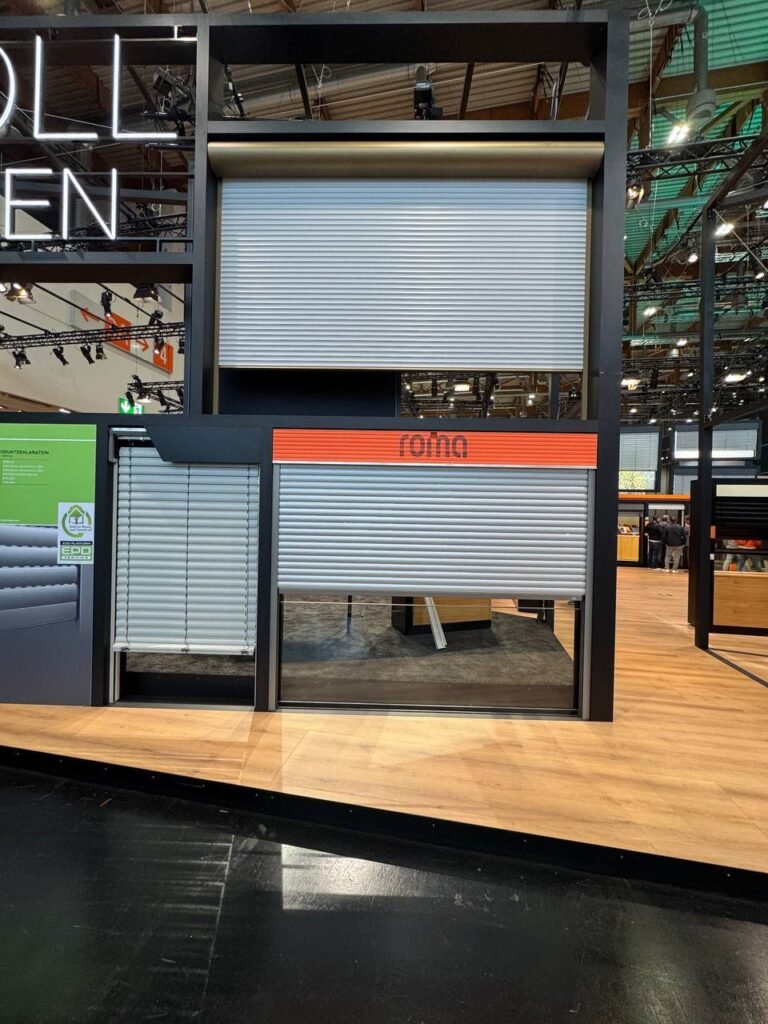
Different types of solar protection: why it is important to choose the system based on the need
At the trade fair Fensterbau Frontale in 2026, a clear trend is observed: different types of solar protection systems are used for different needs.
Within the same project, the following can be combined:
external roller shutters for maximum solar protection and security
integrated systems to maintain aesthetics
classic Venetian blinds for light control
And this is not by chance.
Each solution serves its function:
👉 roller shutters — protection against overheating, security, and additional insulation
👉 Venetian blinds — control of light within the space
👉 integrated systems — balance between functionality and design
🔥 Key point
👉 there is no universal solution “for all windows”
Each area of the project requires its own approach:
sun-facing facade
panoramic windows
entrance group
residential and technical spaces
⚠️ Relation to errors
One of the most common mistakes:
👉 choosing a single type of system “for everything”
As a result:
in some cases, insufficient solar protection
in others, excessive solutions
unnecessary expenses
lack of coherence with the architecture
Acoustic insulation and sound comfort: an invisible but critical factor
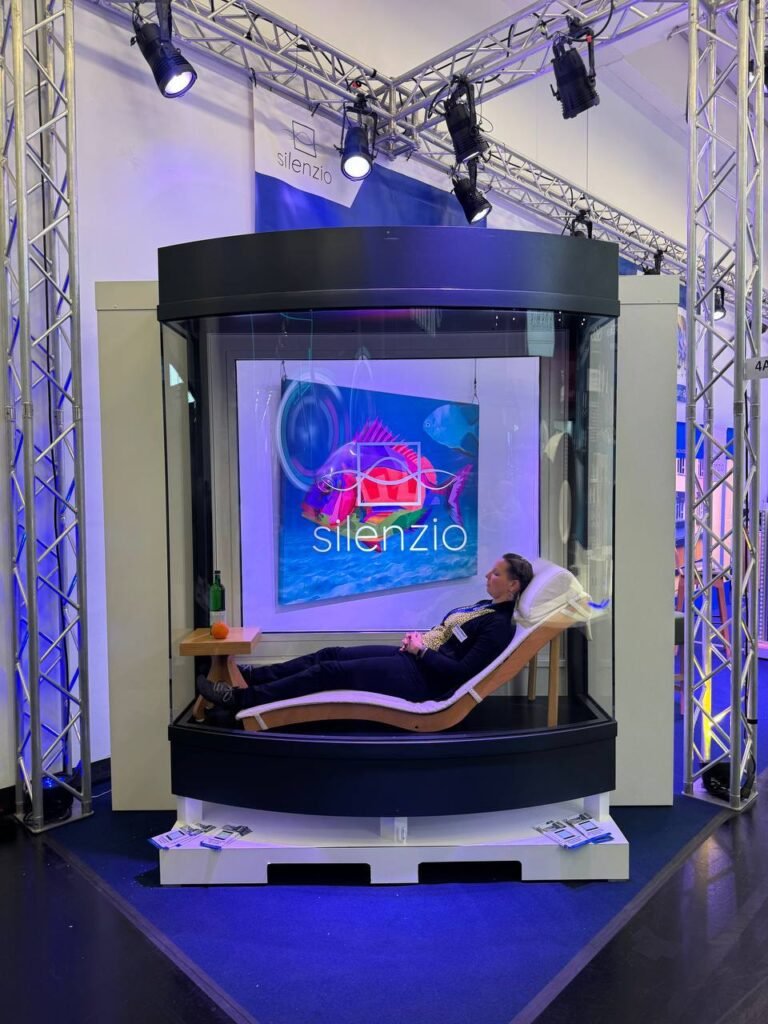
At the trade fair Fensterbau Frontale in 2026, special attention is paid not only to the visual appearance but also to the level of comfort within the space—in particular, acoustic insulation.
At this stand, the effect of acoustic insulation is demonstrated: even with external noise, a sense of silence and comfort is maintained inside.
And this is one of the most underestimated factors when choosing windows.
Most people start thinking about acoustic insulation only after installation—when:
street noise can be heard
discomfort is felt inside
the quality of rest decreases
🔥 Key point
👉 the noise level directly depends on the glazing construction, the profile, and the quality of the installation
It is not an “additional option,” but a basic characteristic of the system.
⚠️ Relation to errors
One of the typical situations:
standard glazing is chosen
the noise level of the area is not taken into account
no calculations are made
As a result:
the windows are installed
but the problem remains
Integrated solar protection systems and next-generation facade solutions
At Fensterbau 2026, a clear transition can be observed from individual elements to complex façade systems, where solar protection is no longer added as an additional component but is integrated into the architecture from the very beginning. These solutions use integrated screens and automated systems that control light, temperature, and privacy without altering the appearance of the building and while maintaining the clean geometry of the facade.
This approach not only increases the level of indoor comfort but also significantly improves the energy efficiency of the property by controlling solar load. It is important to note that such systems require precise design at early stages, as they cannot be properly implemented afterward; therefore, modern facade solutions are increasingly considered part of a unified engineering concept rather than a standalone element.
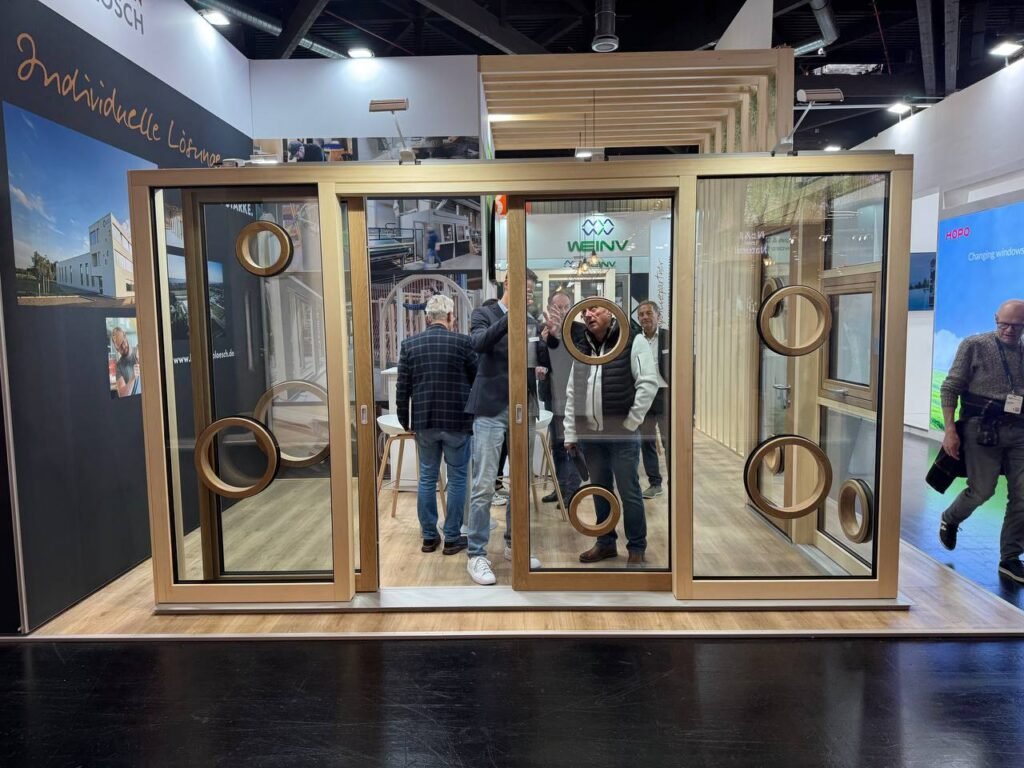
Wood sliding systems: a balance between aesthetics and technology
At Fensterbau 2026, there is a clear increase in interest in systems where natural materials are combined with modern technologies, and wood is once again taking a strong position in the premium segment. Sliding structures with large glazed surfaces allow the feeling of warmth and comfort to be preserved, without losing functionality compared to aluminum solutions and while ensuring a high level of thermal insulation.

Such systems are especially in demand in projects where not only the architecture matters, but also the interior atmosphere of the space: wood adds depth to perception, while panoramic glazing creates a connection with the surroundings. At the same time, behind the visual simplicity lies complex engineering: reinforced profiles, precise geometry, and well-designed mechanics make it possible to implement large-format solutions without loss of stability or ease of use.
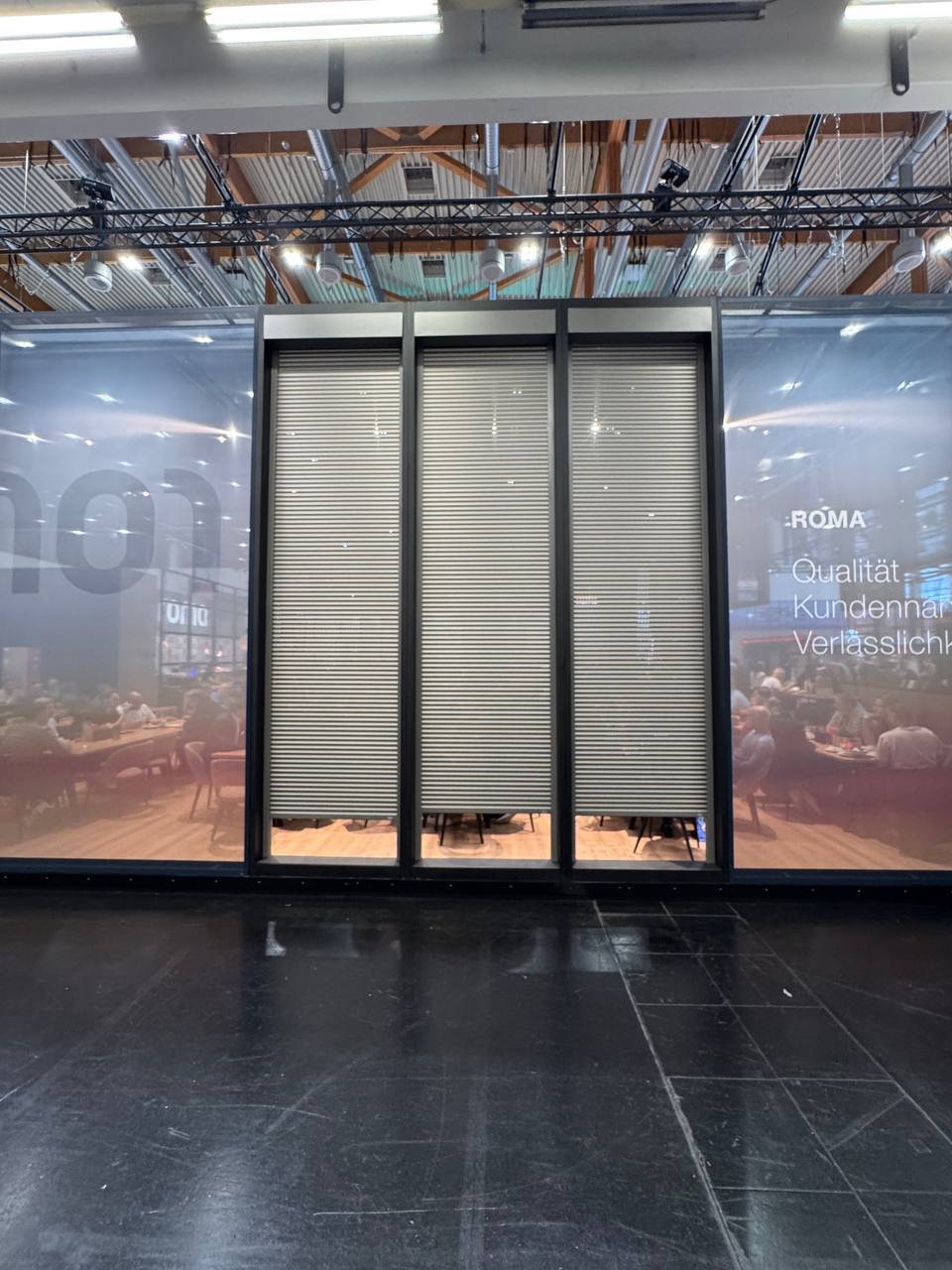
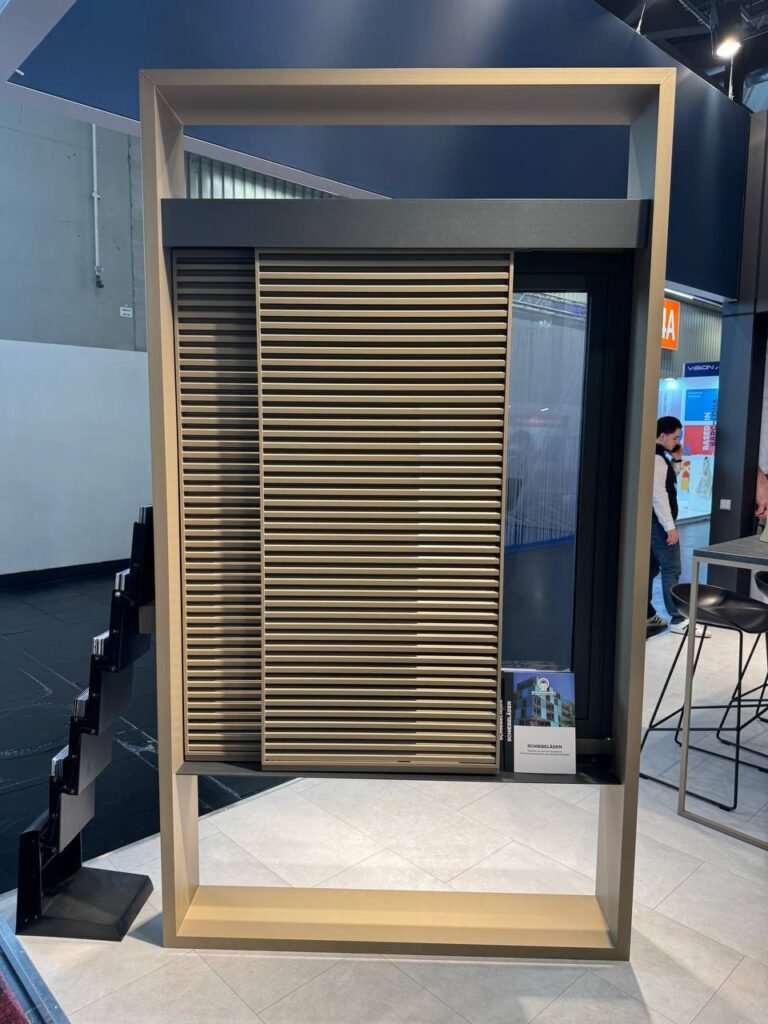
Sliding solar protection panels: architecture in motion
At Fensterbau 2026, more and more solutions can be seen where solar protection becomes part of the architecture rather than a separate element. Sliding panels with louvers allow flexible control of light, creating different scenarios—from a fully open façade to a more closed and private state—while maintaining the integrity of the design and the cleanliness of the lines.
Such systems are especially relevant for modern projects with panoramic glazing, where it is important not only to protect the space from the sun but also to preserve the aesthetic balance of the façade. Unlike traditional solutions, here solar protection acts as a dynamic element: it changes the perception of the building depending on its position, the time of day, and the needs, which requires precise design and an understanding of the overall architectural concept.
Concealed integrated blind systems: technology within the structure
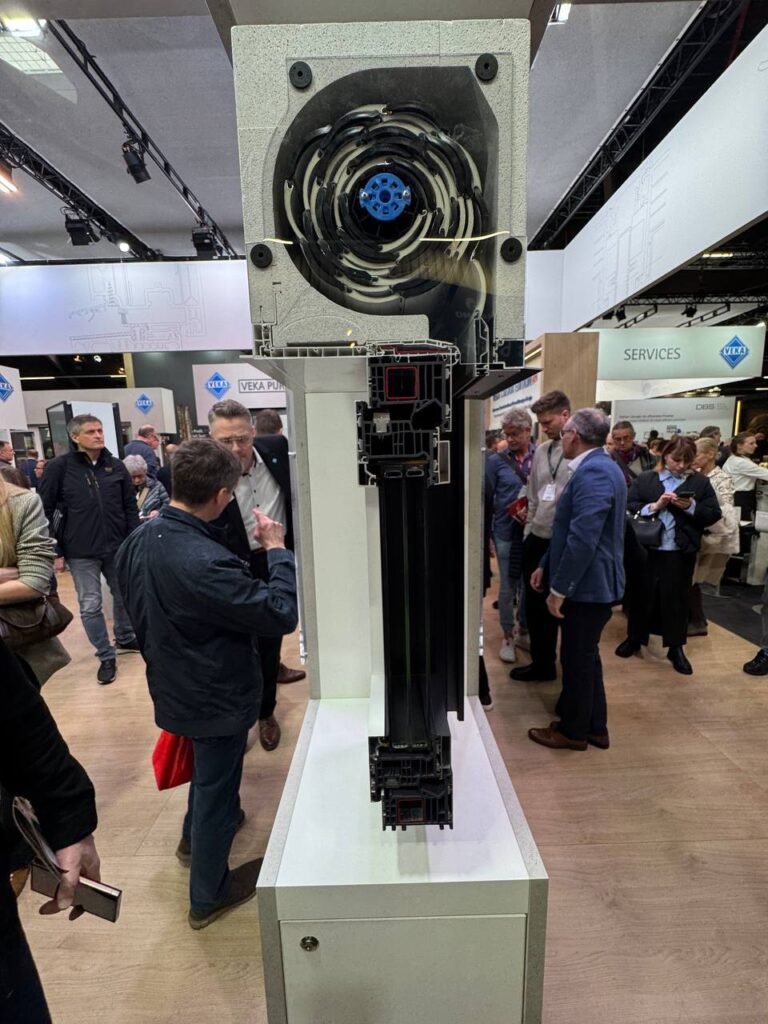
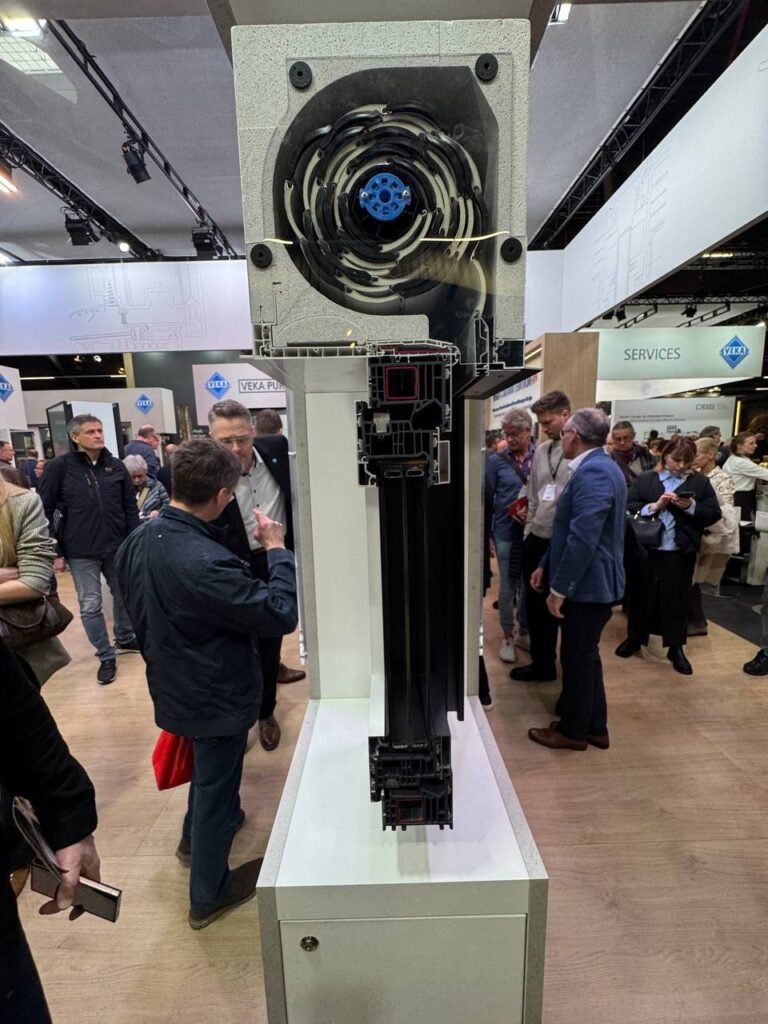
At Fensterbau 2026, it is clearly seen how solar protection is increasingly integrated directly into the window or façade structure instead of being installed separately. In such systems, the blind mechanism is completely concealed within the upper part of the assembly, allowing the façade to maintain a clean geometry and avoid visual overload, while ensuring effective protection against the sun, overheating, and external influences.
Such solutions require a high level of precision in design, as several functions are combined at once: glazing, thermal insulation, solar protection, and movement mechanics. It is precisely in these details that it becomes clear that modern glazing is not a set of elements, but a unified system in which every part must be carefully considered and integrated from the project development stage.
Next-generation sliding systems: maximum glass, minimal barriers
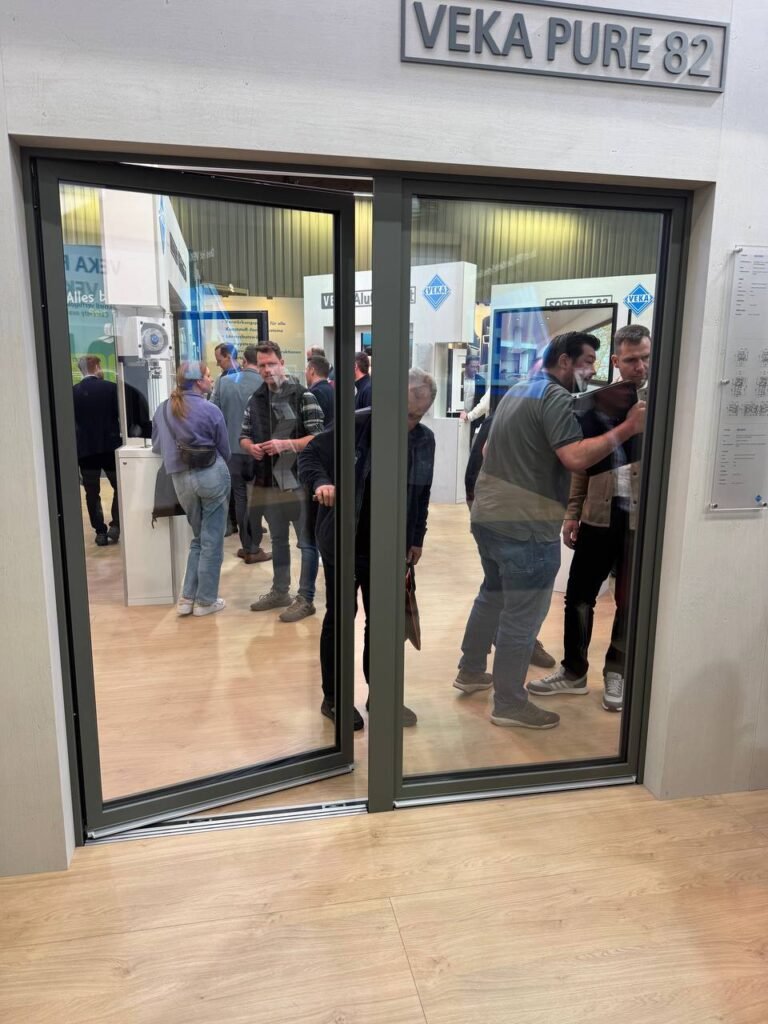
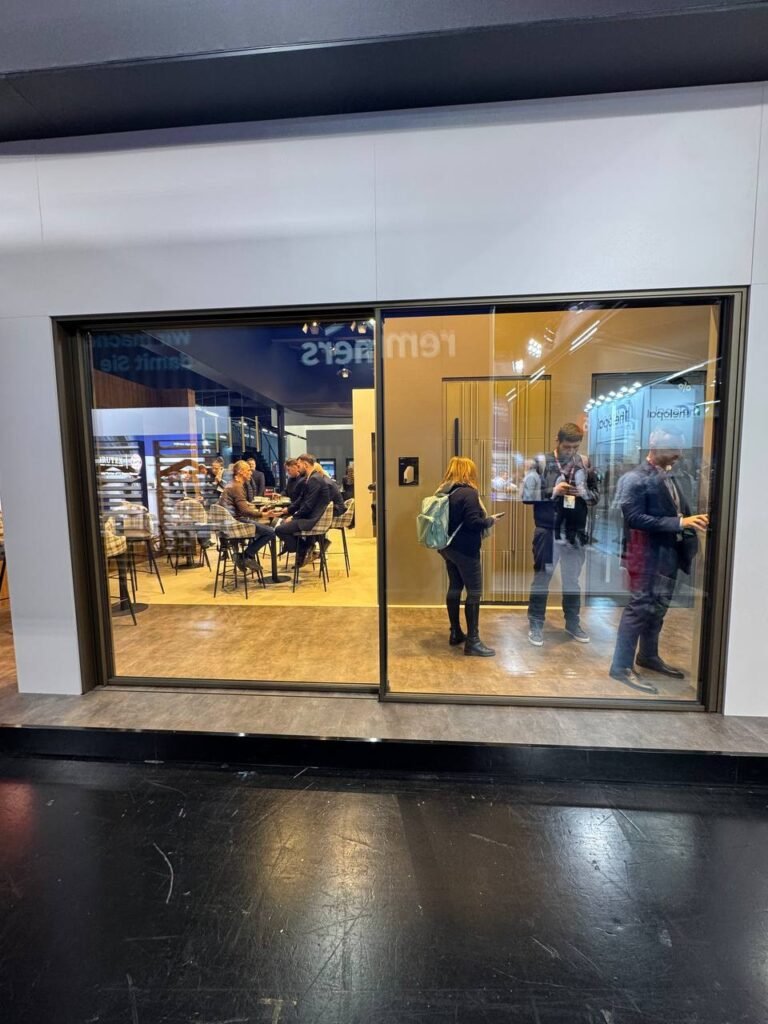
At Fensterbau 2026, sliding systems occupy a key position, and this is no coincidence: they are what largely define modern architecture today. The main focus is on minimizing the profile and increasing the glazed area, which visually expands the space and makes the boundary between the interior and the external environment almost disappear.
At the same time, these solutions have long gone beyond purely aesthetic considerations: behind their lightweight appearance lies a complex construction with precise geometry, well-designed mechanics, and high airtightness. It is in sliding systems that it becomes especially clear how engineering directly influences comfort—from the smoothness of operation to thermal insulation and durability—making them not just a design element, but a key part of the entire glazing system.
Installation systems and fixings: the foundation of structural stability
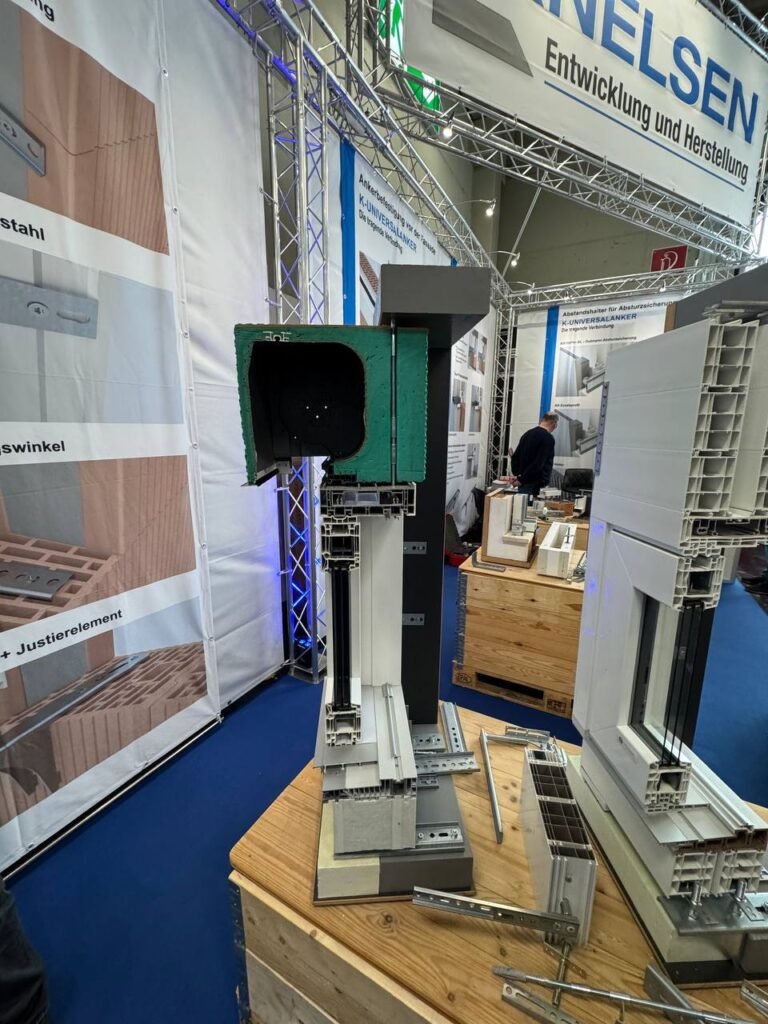
At Fensterbau 2026, special attention is paid not only to the window systems themselves but also to how they are fixed and integrated into the building structure. It is precisely the installation elements and fixing systems that determine the stability of the entire structure, its resistance to loads, and its durability, especially in projects with large openings and panoramic glazing.
These solutions show how important proper load transfer and precise installation are, since even the most advanced system will not function correctly without well-executed монтаж. In modern projects, fixing elements and connection details are no longer a “secondary part” but become a full-fledged element of engineering, directly affecting the final quality of the entire glazing system.
Hardware and ventilation solutions: the details that define the result
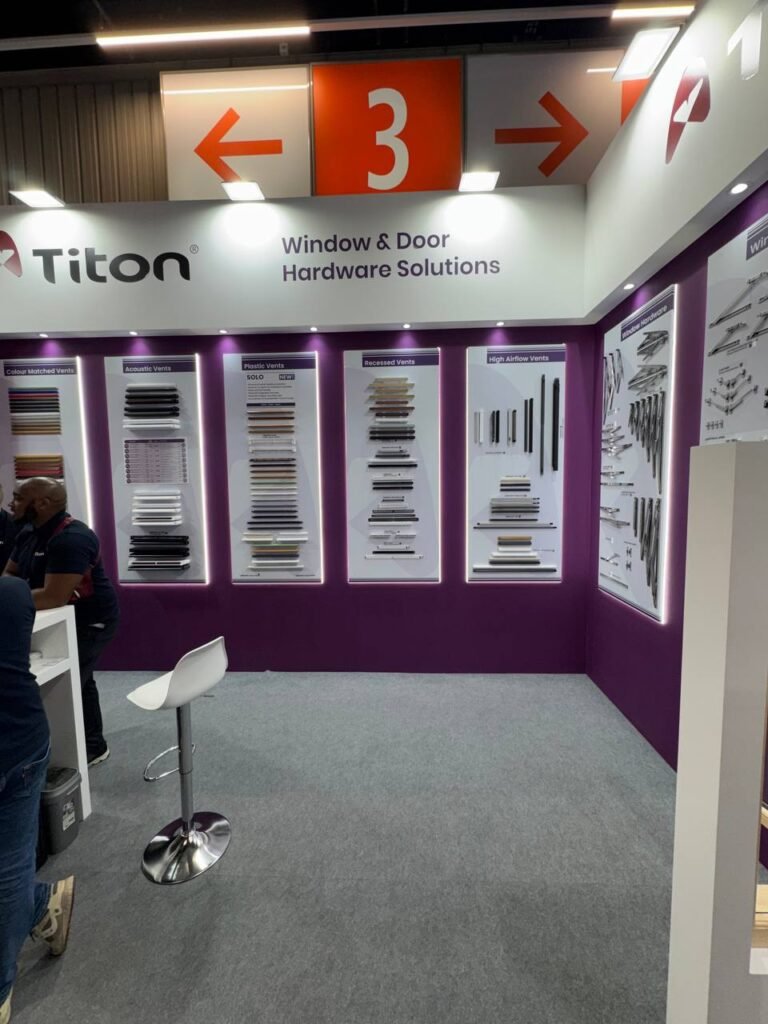
At Fensterbau 2026, it becomes especially clear that hardware and ventilation elements play no less important a role than the profiles or glass units themselves. These details determine everyday use: how the window opens, how smoothly the mechanism operates, how air intake is ensured, and how the indoor microclimate is maintained without losing energy efficiency.
Modern systems have long moved beyond basic functionality and become part of an overall engineering concept: concealed mechanisms, well-designed ventilation modes, and integration into the structure without compromising the design. In such solutions, every detail influences the final perception of quality, and it is precisely through them that it becomes clear whether the system is truly well designed or assembled from separate components without a unified logic.
Entrance doors as an architectural accent: a combination of texture and form
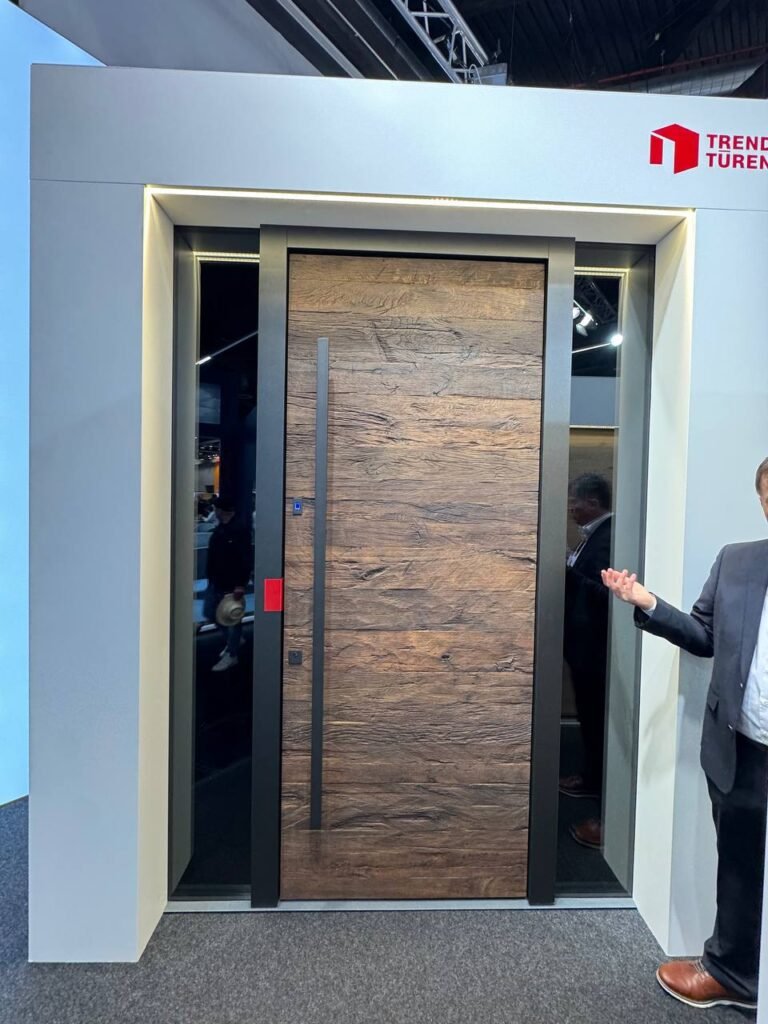
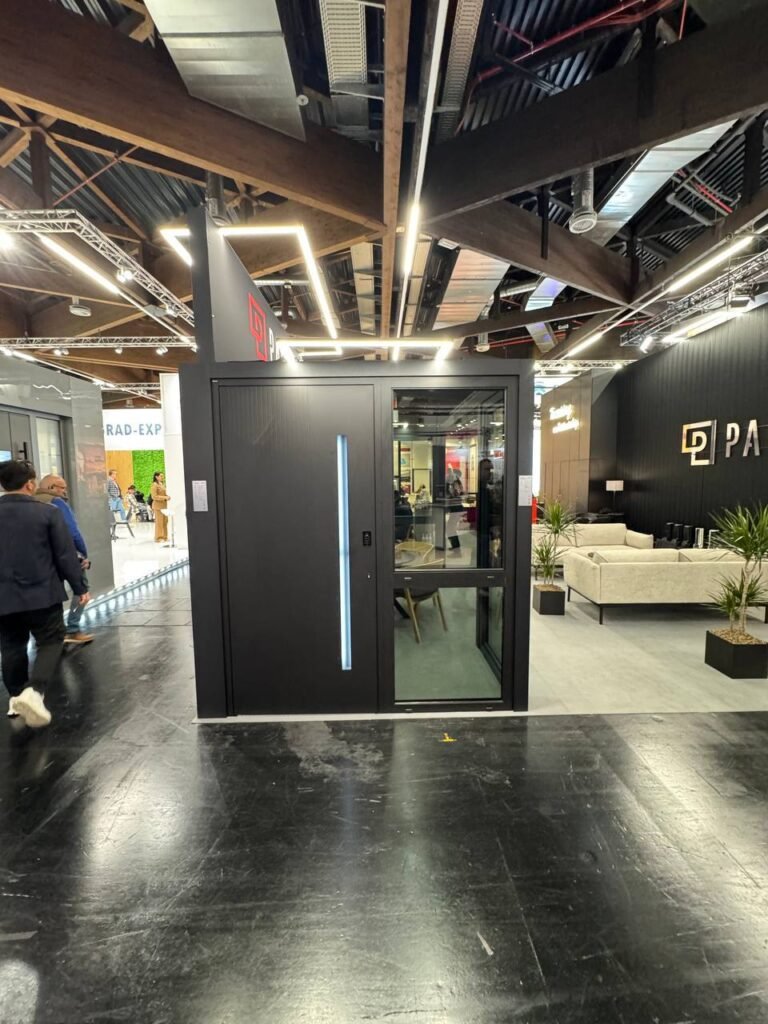
At Fensterbau 2026, entrance doors are increasingly moving beyond standard solutions and becoming a complete architectural element. In this example, an expressive wood texture is used in combination with minimalist geometry and integrated elements, allowing the door not only to perform its function but also to create the first impression of the property.
At the same time, behind the visual simplicity lies a well-thought-out construction: reinforced panels, concealed hardware, security systems, and precise fitting of all elements. It is precisely these solutions that demonstrate that a modern entrance area is not a standalone product, but part of an overall concept in which design and engineering work together to create a cohesive and carefully developed result.
Sistemas de entrada combinados: contraste de materiales y geometría
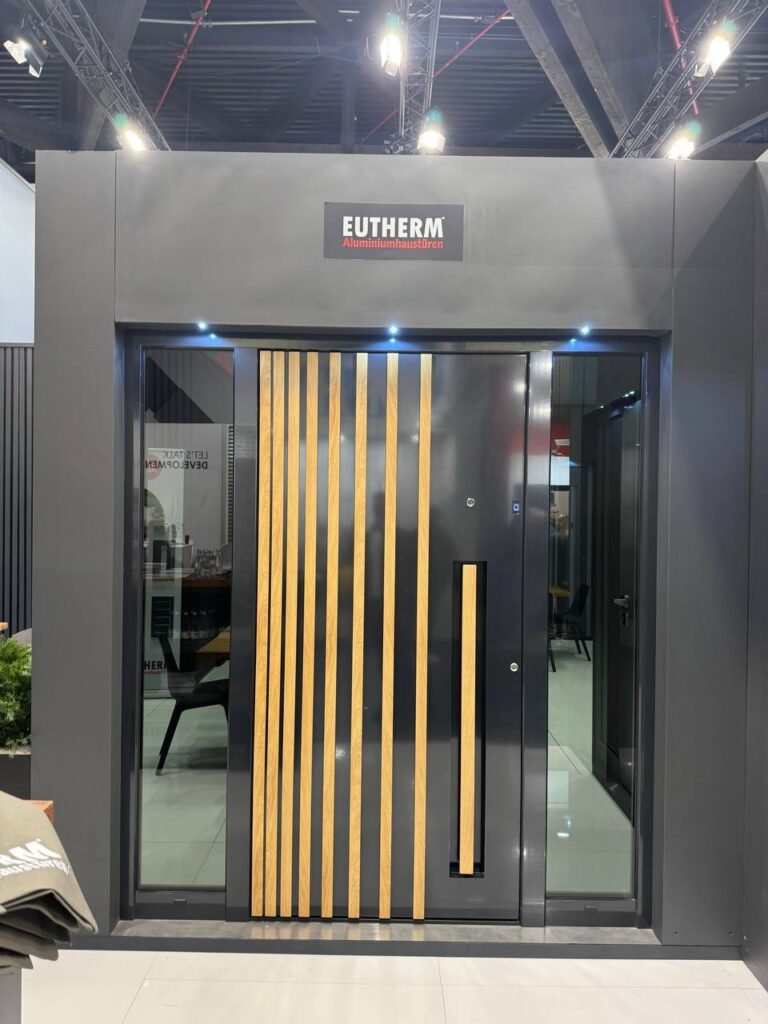
En Fensterbau 2026 se observa claramente la tendencia a la combinación de materiales, donde el metal frío y la madera cálida trabajan juntos, creando una imagen выразительная y memorable. En esta solución, los elementos verticales de madera no actúan solo como decoración, sino que forman el ritmo de la fachada, aportando profundidad y dinamismo, al mismo tiempo que mantienen una geometría estricta y el carácter minimalista de toda la estructura.
Such entrance systems become not only a functional part of the building but also a tool of architectural emphasis that defines the style of the property at first glance. At the same time, behind the visual simplicity lies a complex construction with a high level of execution precision, where every detail—from the arrangement of elements to the integration of hardware—is designed as part of a unified system that combines design and engineering.
Shutters and facade blinds: functionality integrated into design
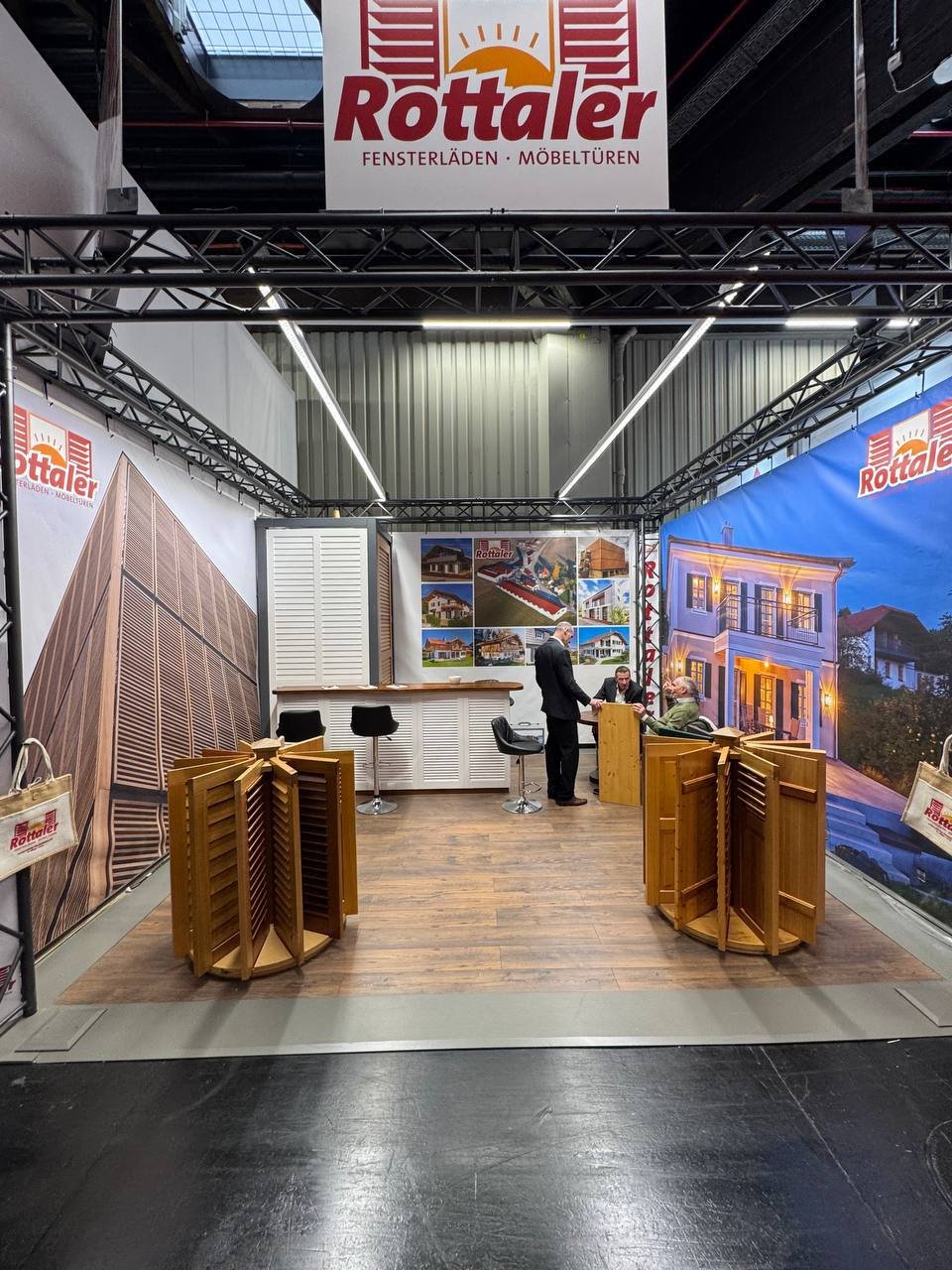
At Fensterbau 2026, it is evident how traditional elements such as shutters and blinds are being reinterpreted in contemporary architecture. They are no longer just a means of sun protection but become part of the facade composition, adding depth, texture, and character to the building, especially in projects with a warm and natural aesthetic.
These solutions not only visually enhance the façade but also perform important functions—light regulation, protection against overheating, and ensuring privacy. At the same time, modern systems are designed to integrate harmoniously into the overall style of the property, maintaining a balance between aesthetics and functionality, which is especially relevant in complex architectural projects.
Installation joints and interfaces: where real quality is defined
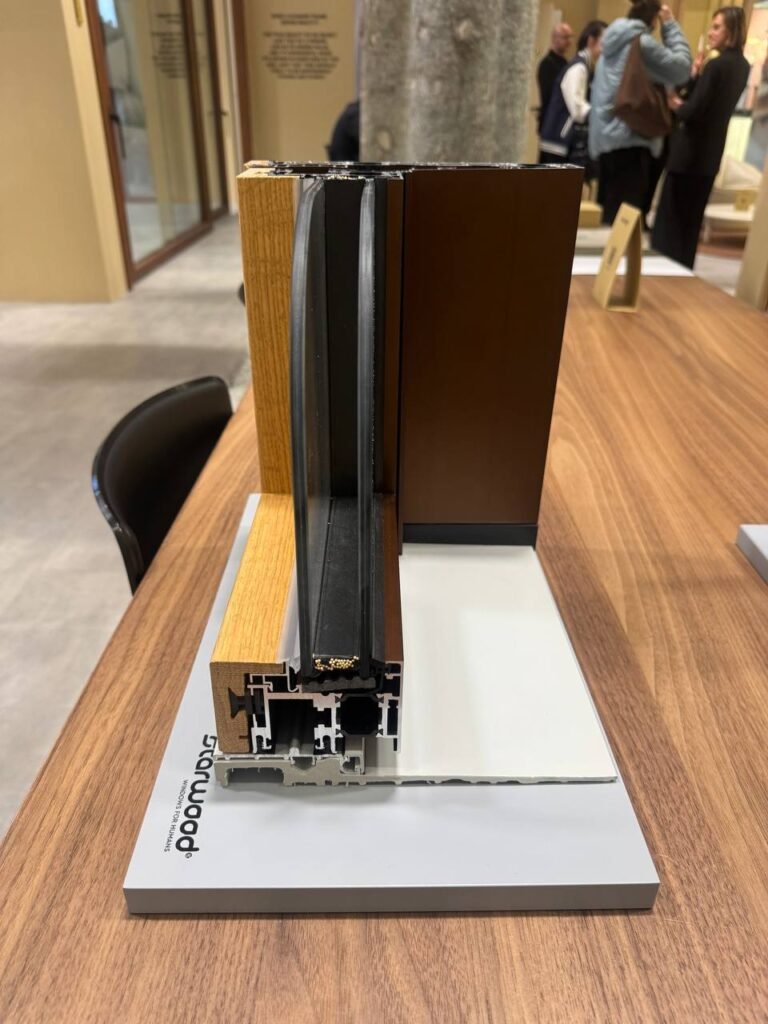
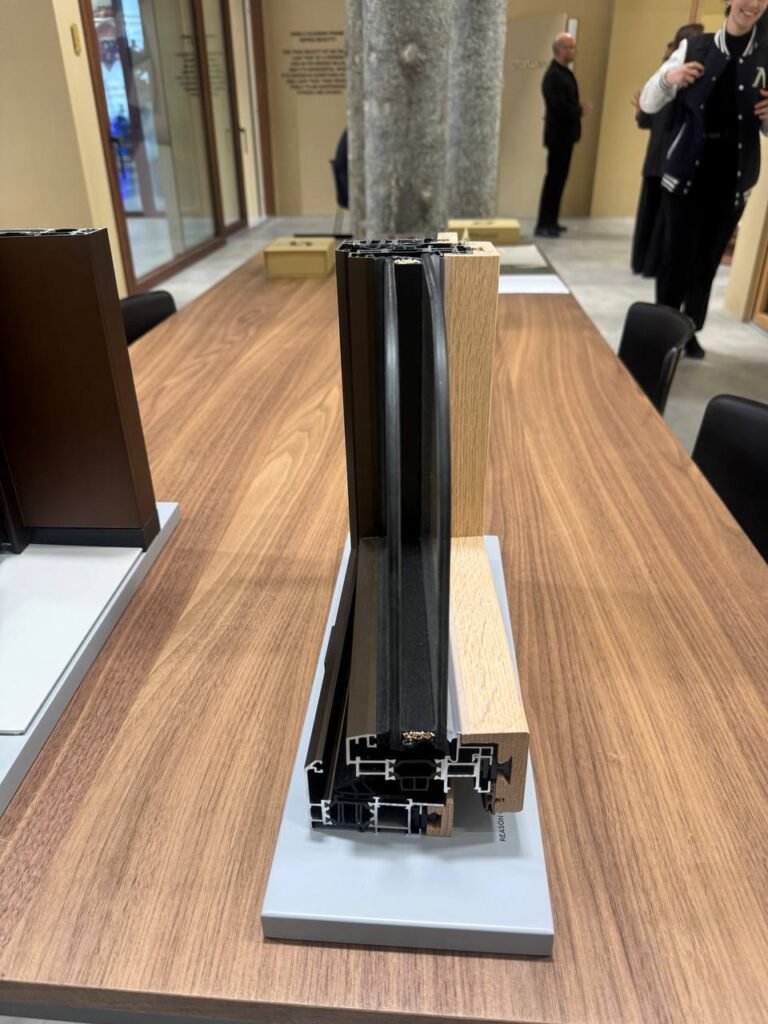
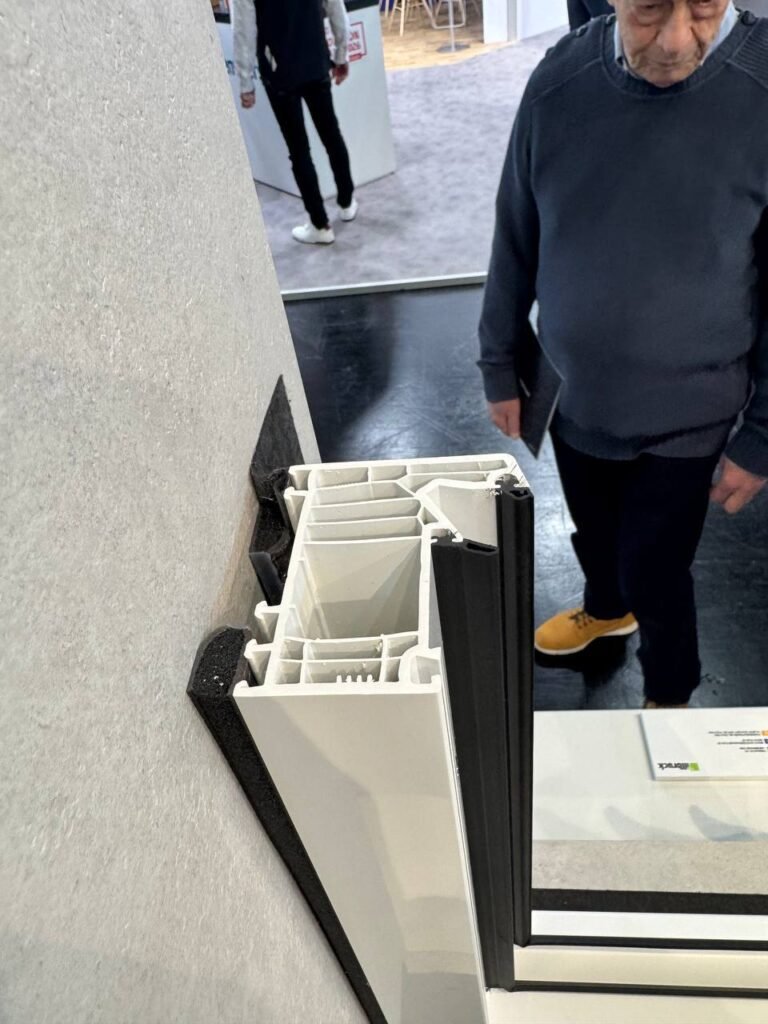
At Fensterbau 2026, what usually remains “behind the scenes” is shown especially clearly: installation joints and interfaces, on which the real quality of the entire system directly depends. It is precisely at these points that airtightness is formed, thermal bridges are eliminated, and structural stability is ensured, regardless of the opening size and operating conditions.
These sections show how complex modern glazing systems have become: multi-chamber profiles, reinforced elements, insulation materials, and precise fixing within the structure. It is at this level that it becomes clear that choosing a window is not based on appearance or brand, but on how each joint is executed and how correctly the entire system is integrated into the project.
Panoramic sliding systems: space without limits
At Fensterbau 2026, panoramic sliding systems continue to set the direction for the entire industry, demonstrating a стремление toward maximum openness of space. Minimal profiles and large glazed surfaces literally erase the boundary between the interior and the external environment, creating a sense of continuity and visual lightness.
However, behind this effect lies complex engineering: reinforced structures, precise mechanics, and well-designed sealing that ensure stability, thermal insulation, and ease of use even with large opening dimensions. It is precisely these solutions that are becoming the standard in modern projects, where it is no longer just about glazing, but about the comprehensive creation of space.
Next-generation entrance groups: design, light, and engineering in one system
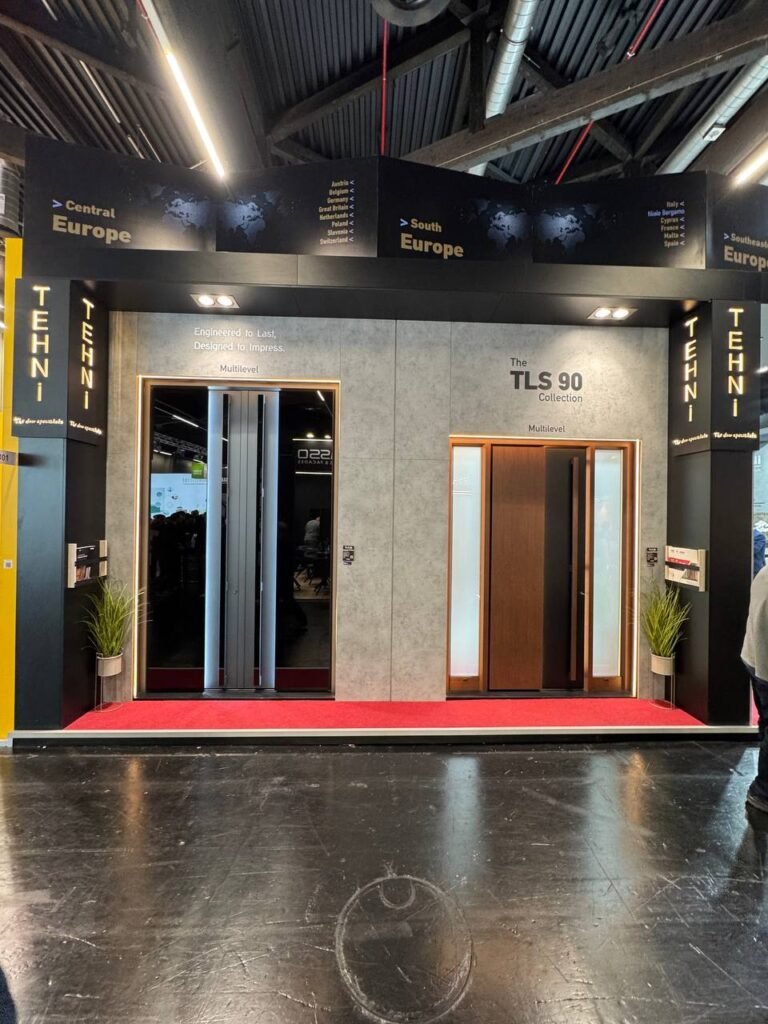
At Fensterbau 2026, entrance groups are increasingly considered as an independent architectural element that defines the style and level of the property even before entering it. Here, combinations of materials, concealed lighting, glass inserts, and strict geometry are actively used, which together create a coherent visual image and enhance the perception of the space.
At the same time, not only the external appearance plays a key role, but also the engineering aspect: the integration of lighting, security systems, precise fitting of elements, and a well-thought-out construction. These solutions demonstrate that a modern entrance group is a complex system, where every detail contributes to the final result, combining aesthetics, functionality, and technology into a single concept.
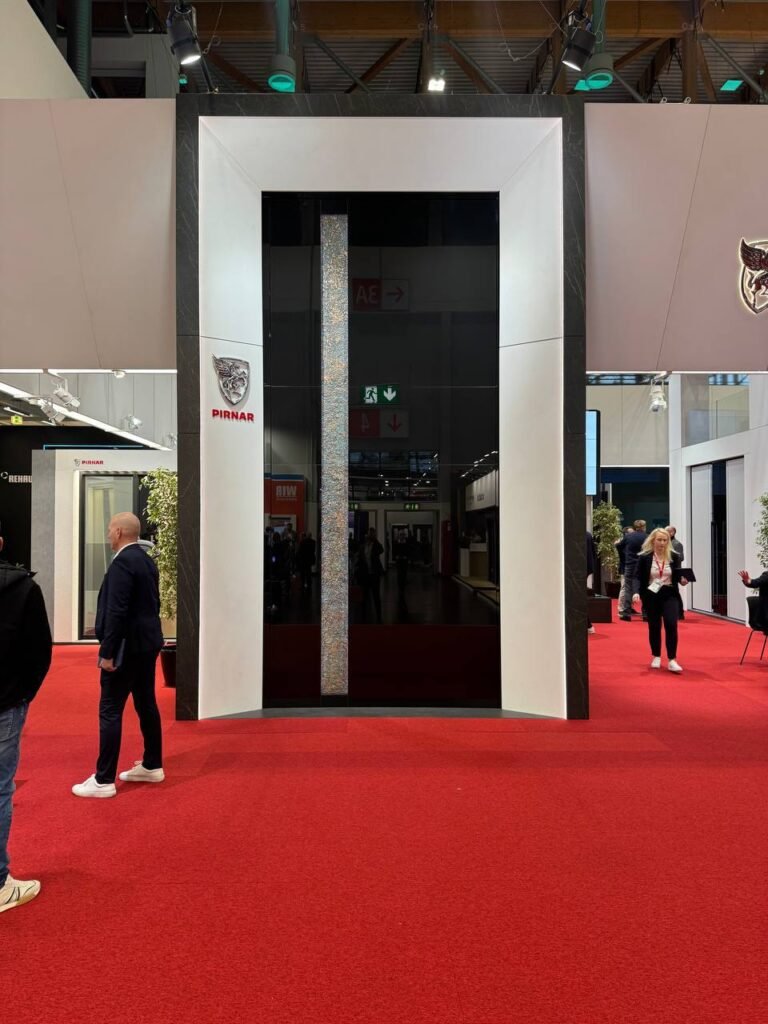
Puertas pivotantes: escala, material y efecto de presencia
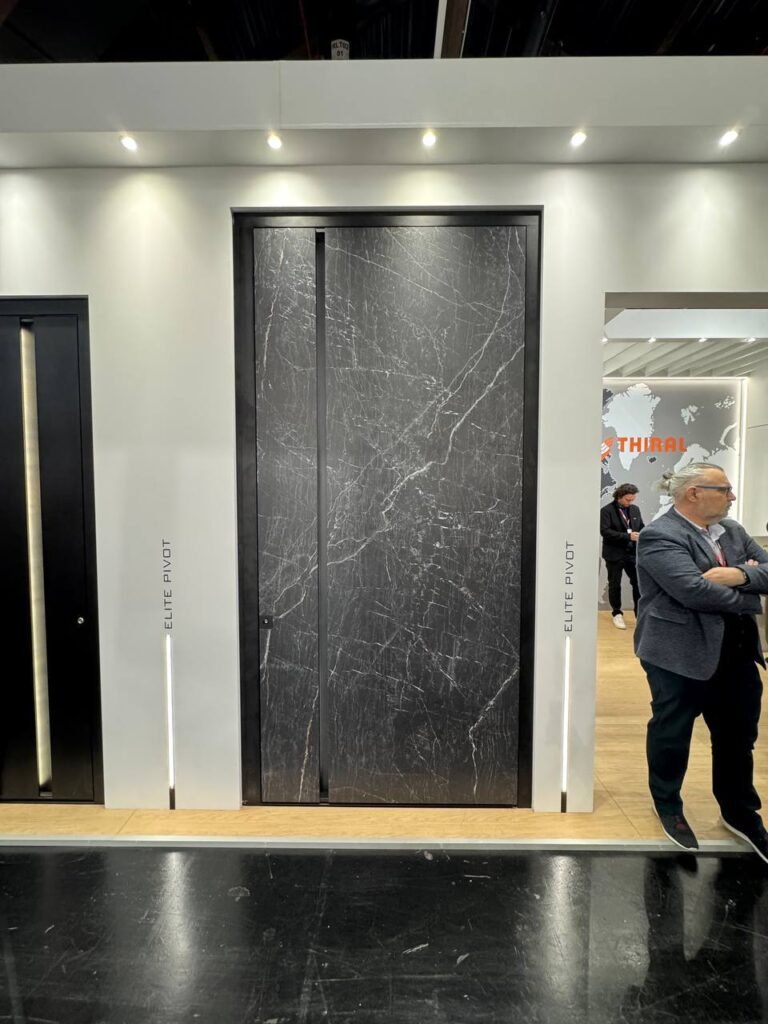
En Fensterbau 2026, las puertas pivotantes ocupan con seguridad una de las posiciones más destacadas en el segmento de los grupos de entrada. Gracias al eje de rotación desplazado, estas конструкcciones permiten crear hojas de gran formato, generando el efecto de una superficie monolítica y reforzando visualmente la escala del acceso, lo que resulta especialmente relevante para villas modernas y proyectos comerciales.
Special attention should be given to the use of materials: stone-like, metal, or composite surfaces turn the door into a true architectural element that is perceived as part of the façade. At the same time, behind the solid appearance lies complex engineering—leaf balancing, precise mechanisms, and reliable fixing—that ensure smooth operation and durability even with large dimensions.
Sistemas loft: estética industrial en la arquitectura contemporánea
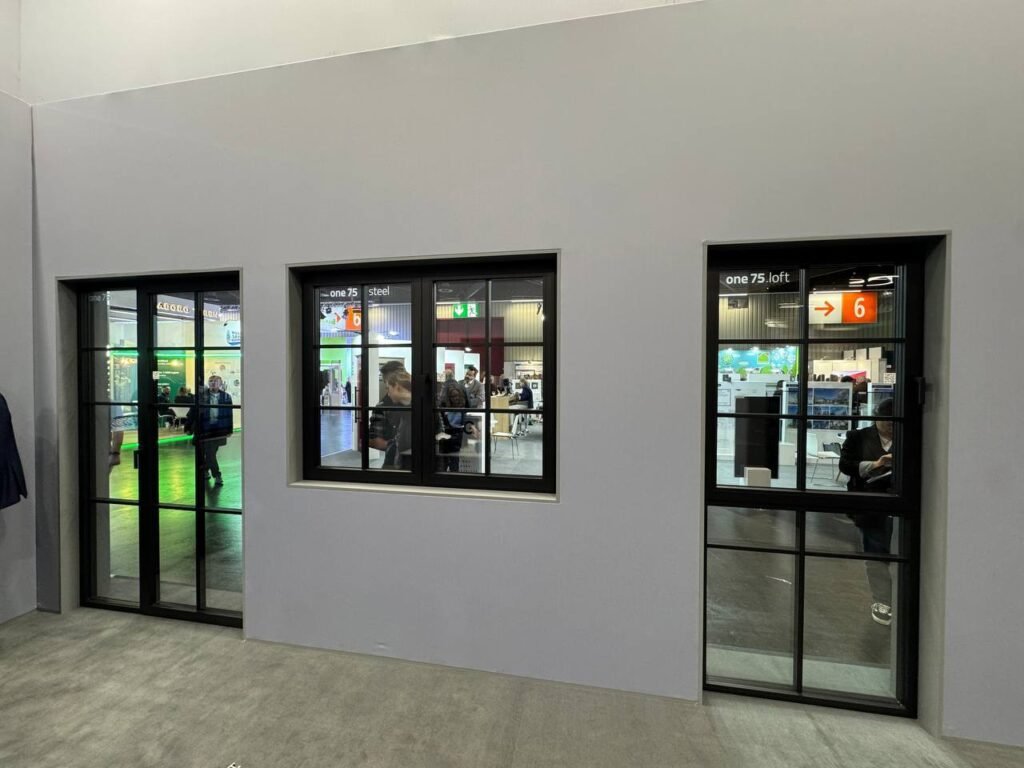
En Fensterbau 2026 se mantiene un interés constante por los sistemas loft, donde los perfiles negros finos crean una geometría definida y aportan un estilo industrial característico. Estas soluciones se utilizan activamente tanto en proyectos residenciales como comerciales, permitiendo estructurar el espacio y, al mismo tiempo, conservar la ligereza visual gracias a la gran cantidad de vidrio.
At the same time, modern loft systems differ significantly from the classic ones: they combine a minimalist appearance with high technical performance—airtightness, thermal insulation, and reliable hardware. They are no longer just a decorative element, but a complete glazing system that integrates organically into the architecture and meets the requirements of modern construction.
Custom glazing shapes: when the standard no longer works
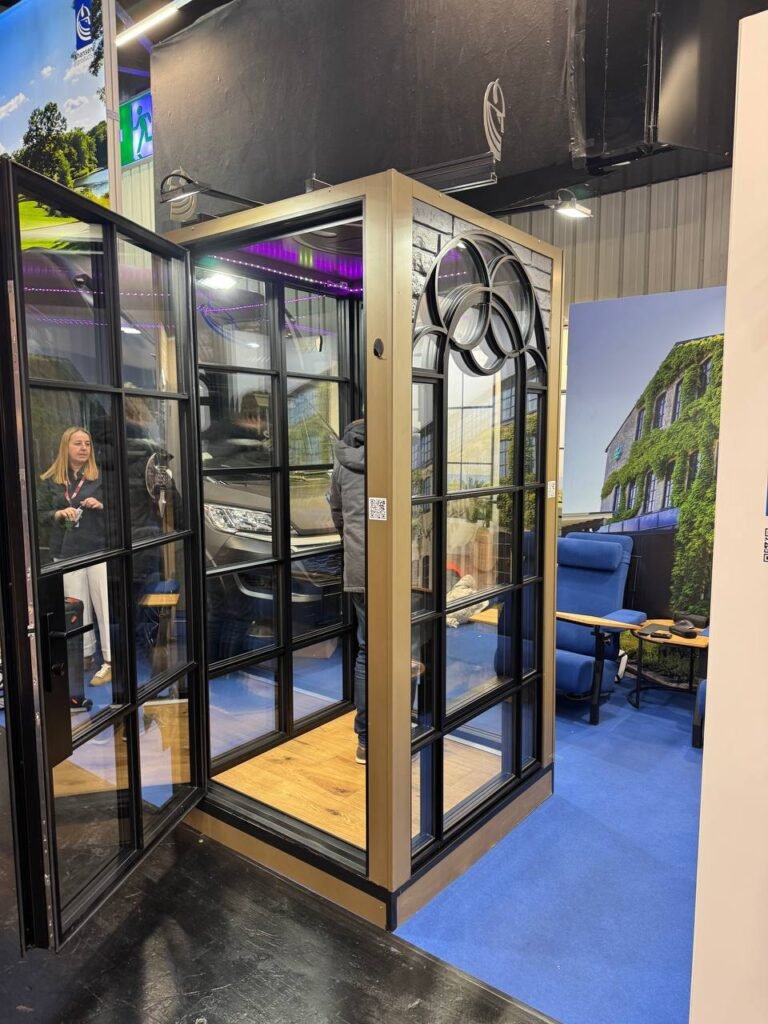
At Fensterbau 2026, more and more solutions are presented that go beyond standard geometry, where glazing becomes an individual design tool. Arched shapes, decorative elements, and complex frameworks make it possible to create unique façades and interiors that cannot be achieved with typical systems.
Such structures require not only a design approach but also a high level of engineering precision, as each non-standard shape involves individual calculations, manufacturing, and installation. It is precisely in these solutions that it becomes most evident how glazing becomes part of the architectural idea rather than just a functional element, defining the character of the space and enhancing the visual perception of the property.
Diseño personalizado de puertas de entrada: de la idea a una solución única
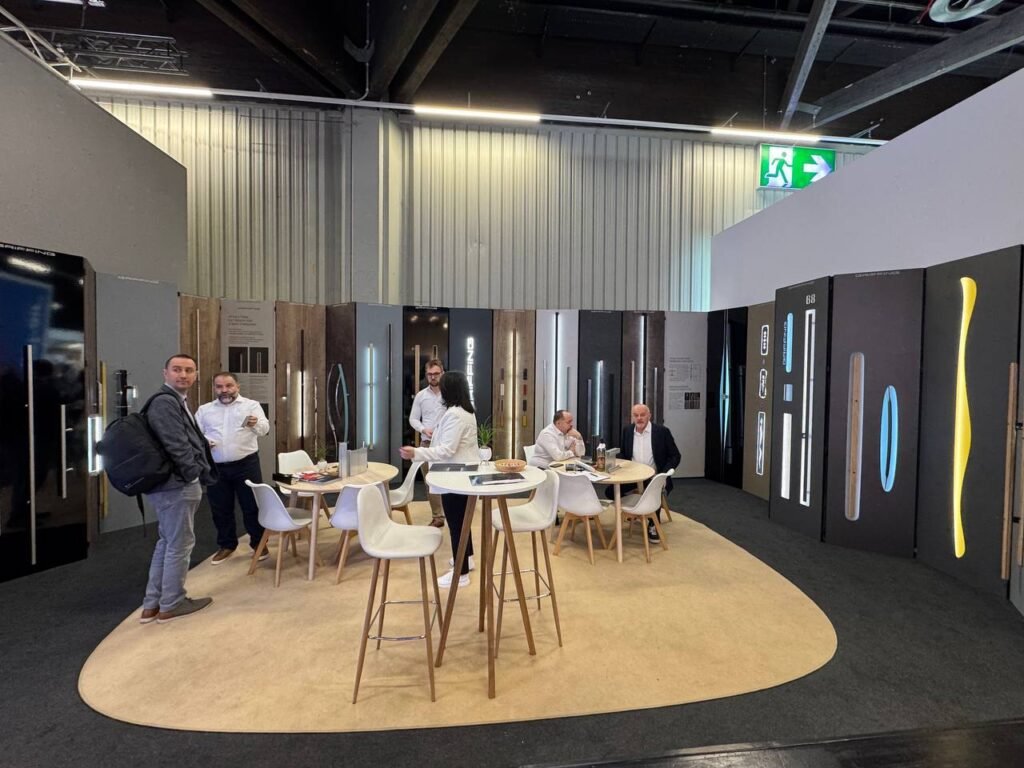
En Fensterbau 2026 se observa claramente hasta qué punto el mercado se ha orientado hacia soluciones personalizadas, especialmente en el segmento de las puertas de entrada. Los fabricantes presentan colecciones completas en las que cada modelo se distingue no solo por el acabado, sino también por el concepto: el trabajo con la iluminación, la forma, la textura y las proporciones permite crear puertas que se convierten en parte de la imagen arquitectónica, y no simplemente en un elemento de acceso.
At the same time, the diversity of design is supported by a complex engineering foundation: integration of lighting, concealed opening systems, modern materials, and precise assembly. These solutions demonstrate that today the choice of a door is not based on a catalog, but on a project, where every detail is tailored to a specific property, creating a unique result.
Puertas de entrada premium como elemento de arquitectura y arte
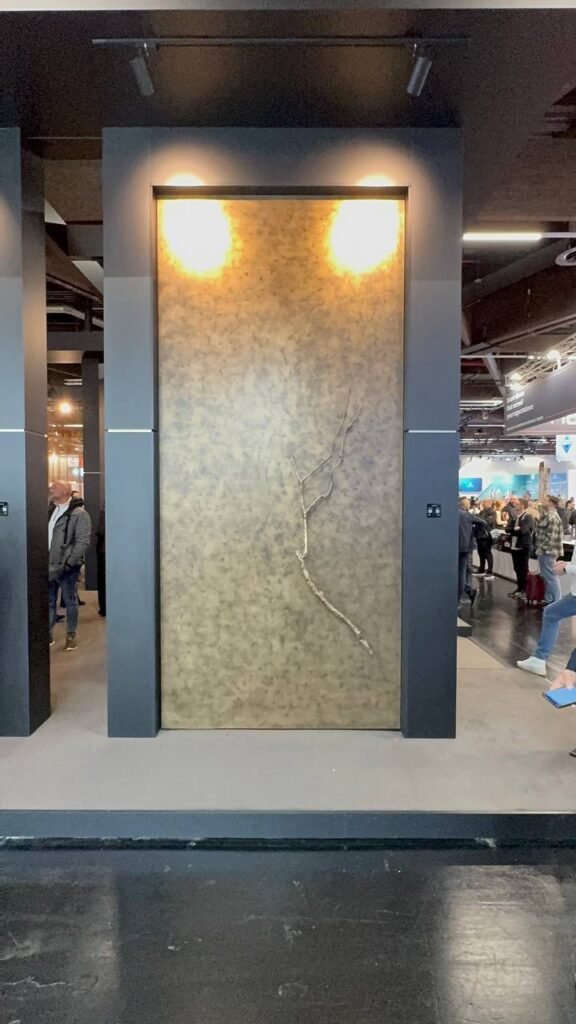
En la feria se encuentran cada vez más soluciones en las que la puerta de entrada va más allá de su función habitual y se convierte en un verdadero acento arquitectónico. El uso de texturas complejas, inserciones decorativas y iluminación integrada permite crear composiciones impactantes que influyen en la primera impresión del objeto incluso antes de que una persona entre en él.

At the same time, behind the visual expressiveness there is always a solid engineering foundation: reinforced structures, well-designed thermal and acoustic insulation, as well as the integration of modern control and security systems. These doors are not just a façade element, but the result of a comprehensive approach in which design and technology work as a unified whole.
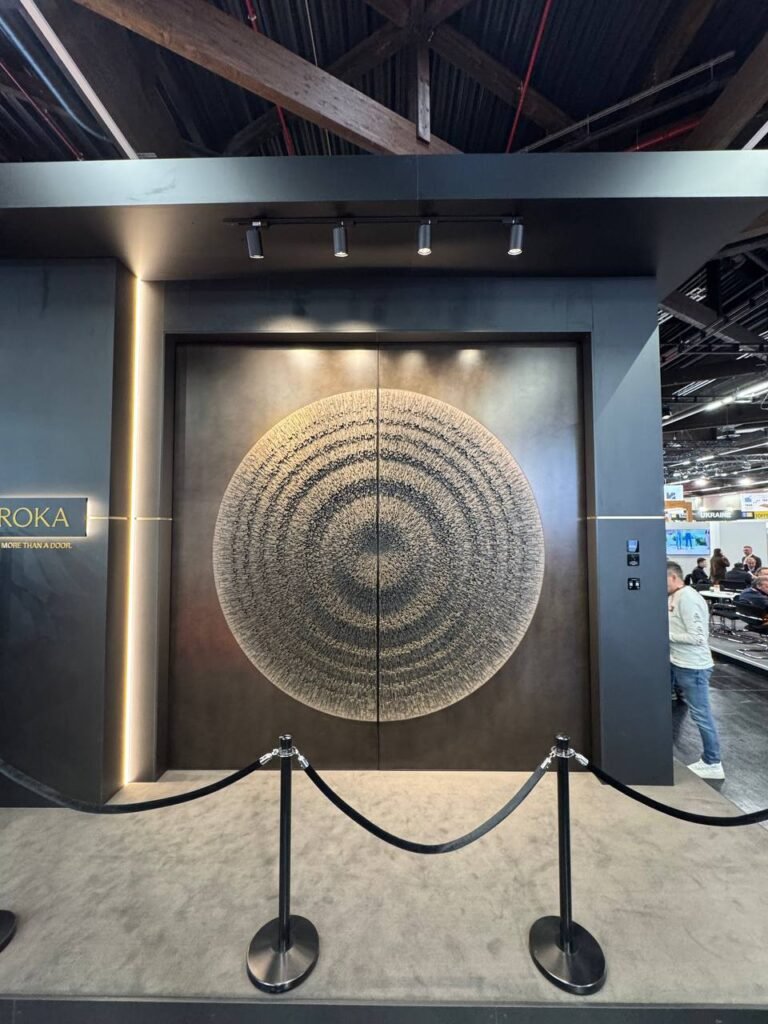
Exclusive entrance groups: when the door becomes a work of art
At the exhibition, particular attention is drawn to solutions in which the entrance door is no longer just a structure but becomes a true work of art. Large formats, symmetrical compositions, complex textures, and deep surface detailing create a strong visual accent that defines the character of the entire architecture. These doors do not merely complement the facade but become its focal point, around which the perception of the property is built.
It is important that behind this visual effect there is solid engineering: large door leaves require precise calculations, reinforced fixing systems, reliable hardware, and perfect balancing. At the same time, all key characteristics are maintained—thermal insulation, airtightness, and security. The result is a solution in which design, technology, and status are combined in a single element, creating a new level in entrance systems.
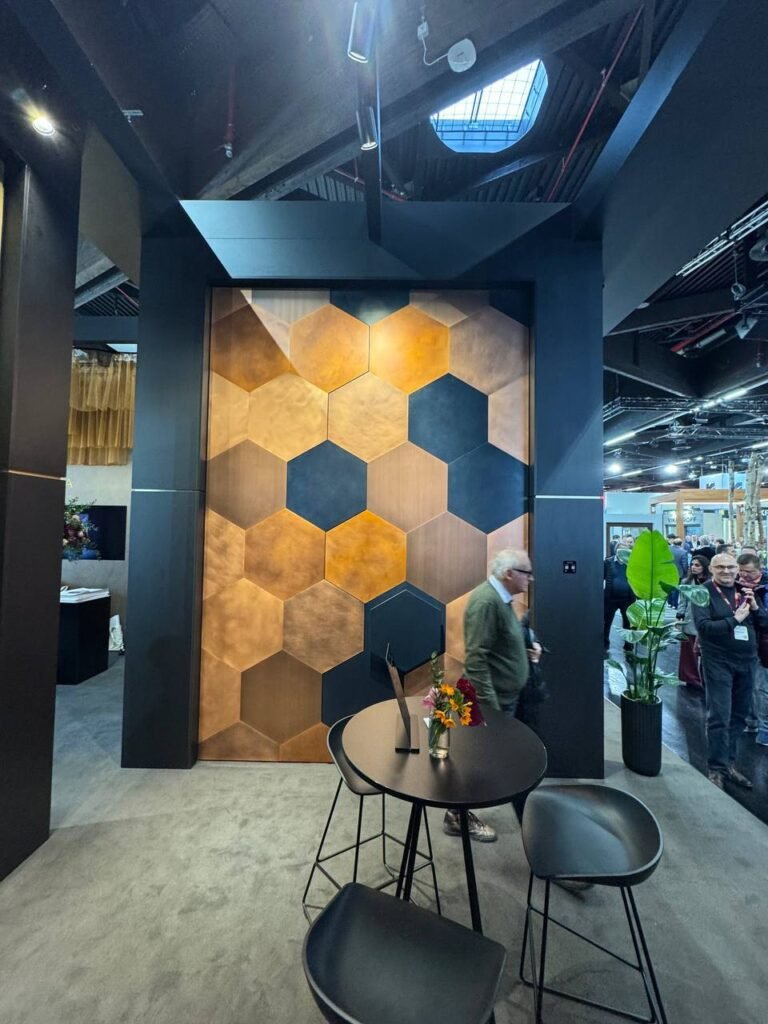
Geometry and textures: a new language in entrance system design
Modern entrance systems increasingly use geometry as the main tool for visual impact. Complex shapes, modular compositions, and the combination of different textures make it possible to create dynamic façade solutions that immediately attract attention and shape the unique architectural style of the property. These doors function not only as a practical element but also as a design surface that sets the tone for the entire space.
At the same time, each of these systems is the result of precise engineering development: different materials require proper integration, consideration of thermal expansion, and the maintenance of structural airtightness. Visual complexity must not affect performance, so manufacturers combine aesthetic solutions with high standards of thermal insulation, durability, and security, creating truly comprehensive products.
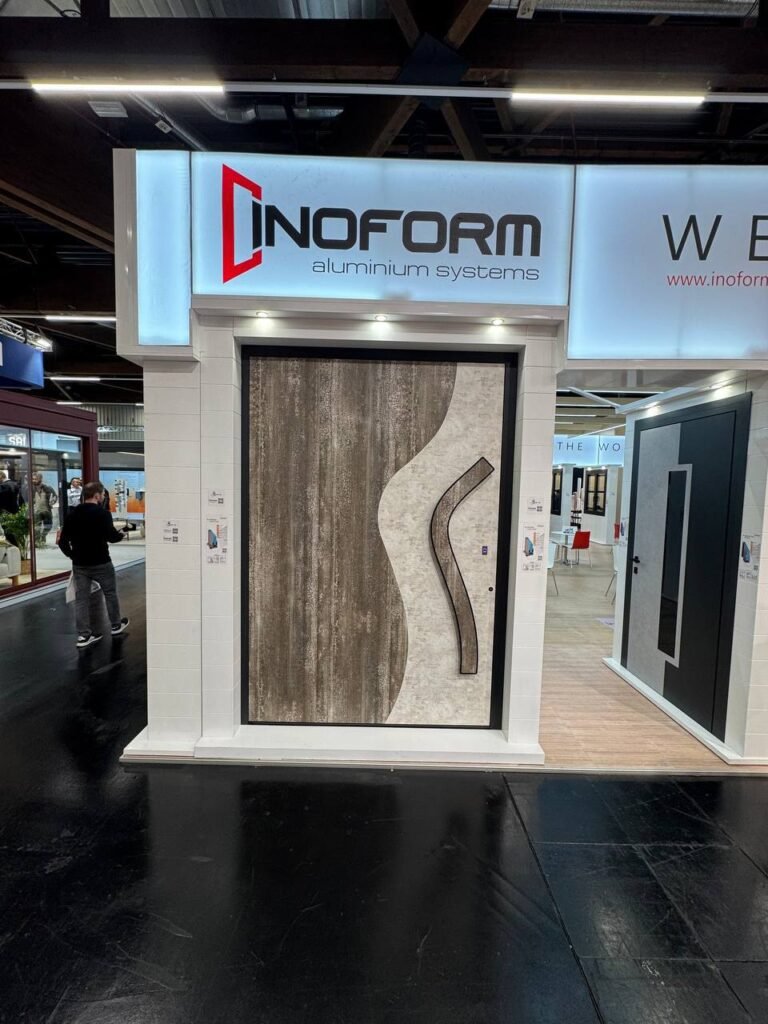
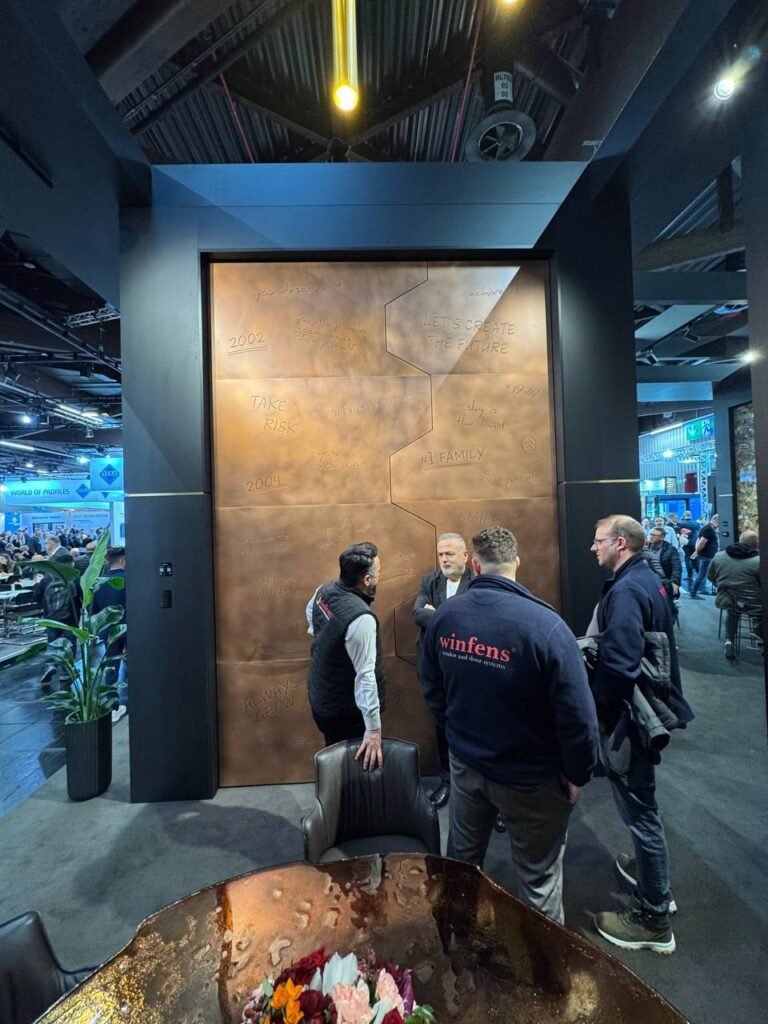
Materials and emotions: doors as part of architectural philosophy
Modern entrance doors are increasingly becoming not just a façade element, but a carrier of idea and emotion. The use of complex textures, unconventional finishes, and even graphic elements makes it possible to create solutions that evoke sensations and associations even before interacting with the property. These doors act as a visual manifesto: they set the tone of the architecture and emphasize the individuality of the project.
At the same time, behind the expressive surface lies a well-thought-out construction that ensures stability, airtightness, and durability. Engineering solutions make it possible to integrate decorative elements without compromising performance, maintaining a balance between aesthetics and functionality. As a result, a product is created that simultaneously delivers in visual perception, comfort, and technical reliability.
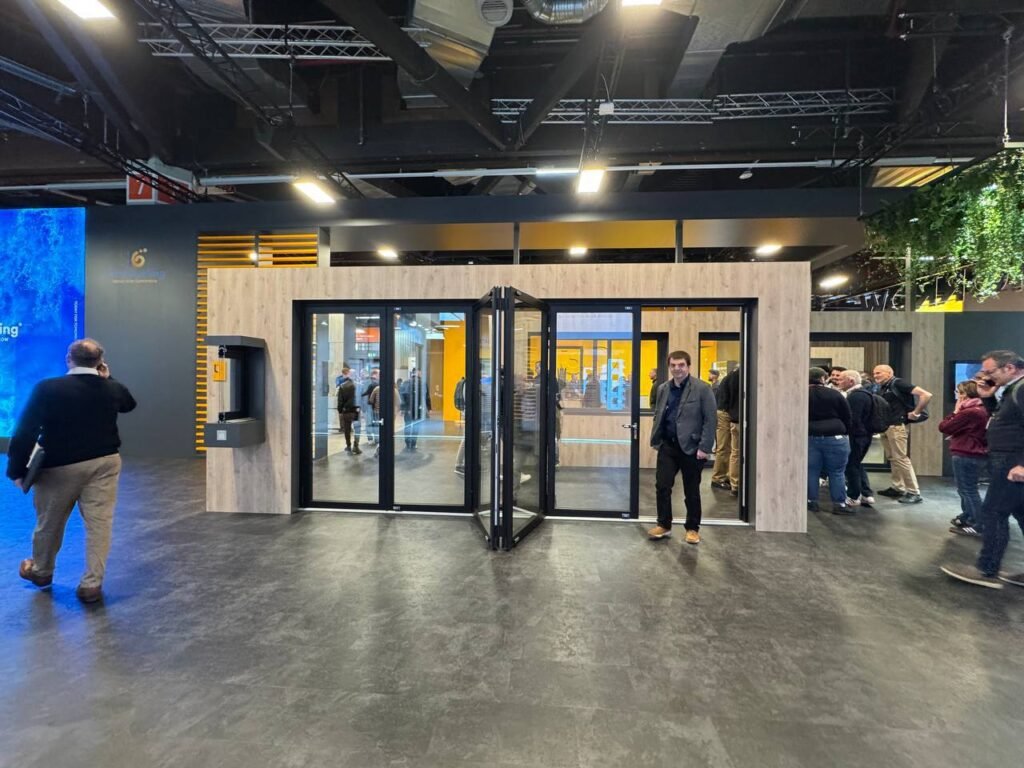
Folding glazing systems: space flexibility and maximum light intake
One of the key trends at the exhibition remains folding glazing systems, which make it possible to literally “dissolve” the boundary between the interior and exterior space. These solutions allow the opening to be fully opened, creating the effect of a unified space—whether it is access to a terrace, an inner courtyard, or a commercial area. This is especially relevant for contemporary architecture, where light, air, and freedom of layout are fundamental.
From an engineering standpoint, these systems require a high level of precision: complex hardware, reliable tracks, and well-thought-out geometry ensure smooth operation even at large dimensions. At the same time, key characteristics are maintained—airtightness, thermal insulation, and load resistance. As a result, folding structures become not only a design solution but also a complete tool for transforming space.
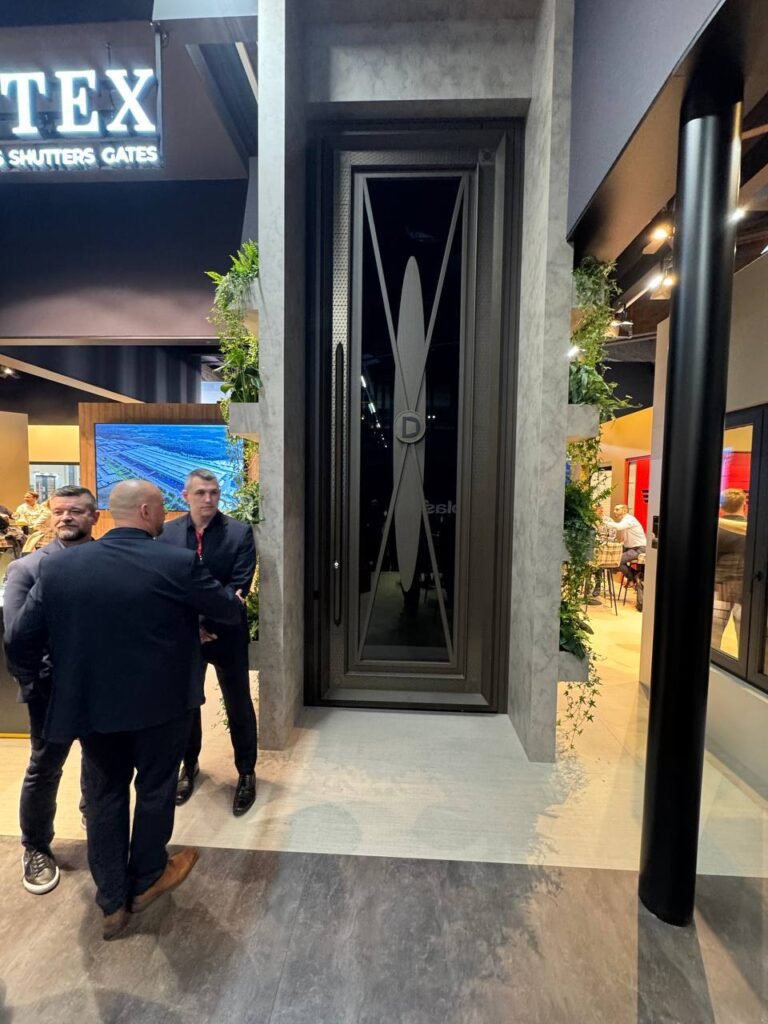
Minimalism and technology: next-generation entrance systems
Modern entrance doors are increasingly oriented toward minimalism, where clean lines, concealed elements, and well-thought-out lighting play a key role. Visually, these solutions appear extremely concise, but it is precisely in this simplicity that their strength lies: they fit perfectly into contemporary architecture and highlight the status of the property without overloading it with unnecessary details.
At the same time, behind the restrained exterior lie advanced technologies: access control systems, integration with smart home systems, concealed hardware, and improved levels of thermal and acoustic insulation. These doors become part of a unified engineering system of the building, where design and technology work in sync, ensuring comfort, security, and durability.
Hidden engineering: technologies inside window systems
Behind the visual part of modern window and door systems lies a complex engineering architecture that directly affects comfort and durability. At the exhibition, these cross-sections make it possible to see how ventilation, drainage, reinforcement, and sealing systems are implemented inside the profile. Particular attention is given to the integration of additional functions—from micro-ventilation to automatic mechanisms—that operate without compromising aesthetics.
Estas soluciones requieren un desarrollo preciso de cada elemento: perfiles multicámara, refuerzos, juntas y nudos ocultos deben funcionar como un sistema unificado. Es precisamente gracias a esto que se alcanzan altos niveles de aislamiento térmico, aislamiento acústico y eficiencia energética, que hoy en día son el estándar del segmento premium del acristalamiento.
Finishes and colors: the detail that defines perception
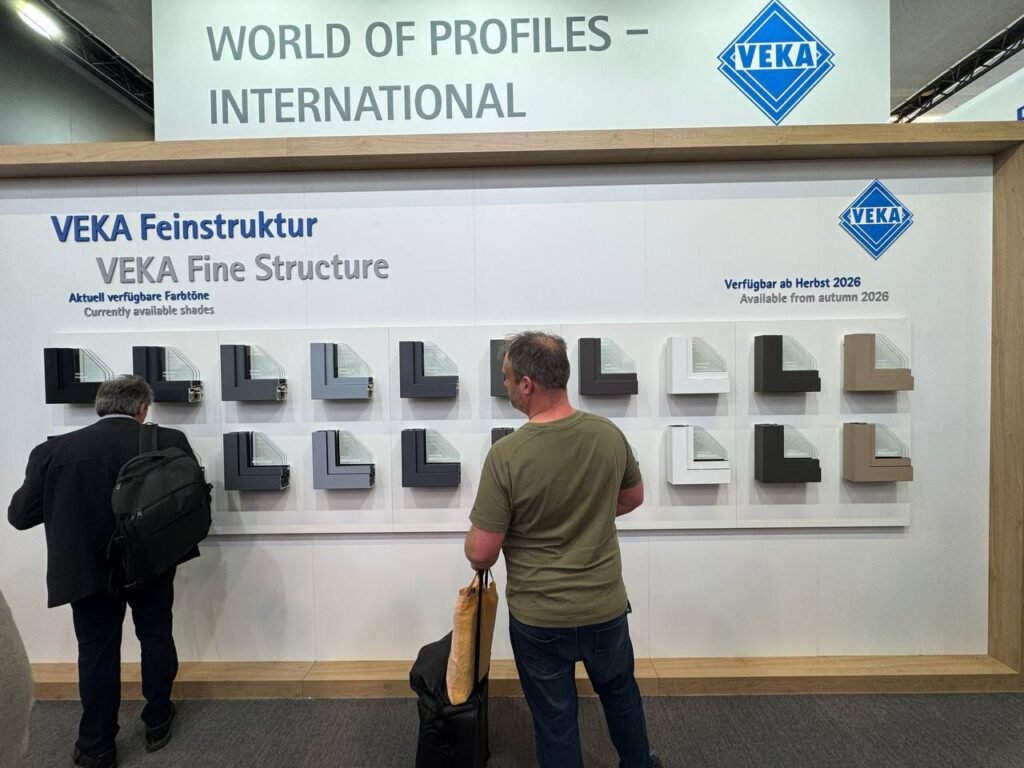
Modern window systems are increasingly considered not only from a structural perspective but also as a design element, where the final finish plays a key role. At the exhibition, it can be seen how much the range of textures and shades has expanded: from classic solutions to complex matte and textured finishes that visually resemble natural materials and current architectural trends.
At the same time, these finishes serve not only an aesthetic function but also a practical one: resistance to external influences, color durability, and preservation of appearance over many years. Manufacturers aim to create solutions that meet the demands of architects, designers, and end users simultaneously, offering a balance between visual expressiveness and reliability in use.
Why the standard approach to choosing windows no longer works
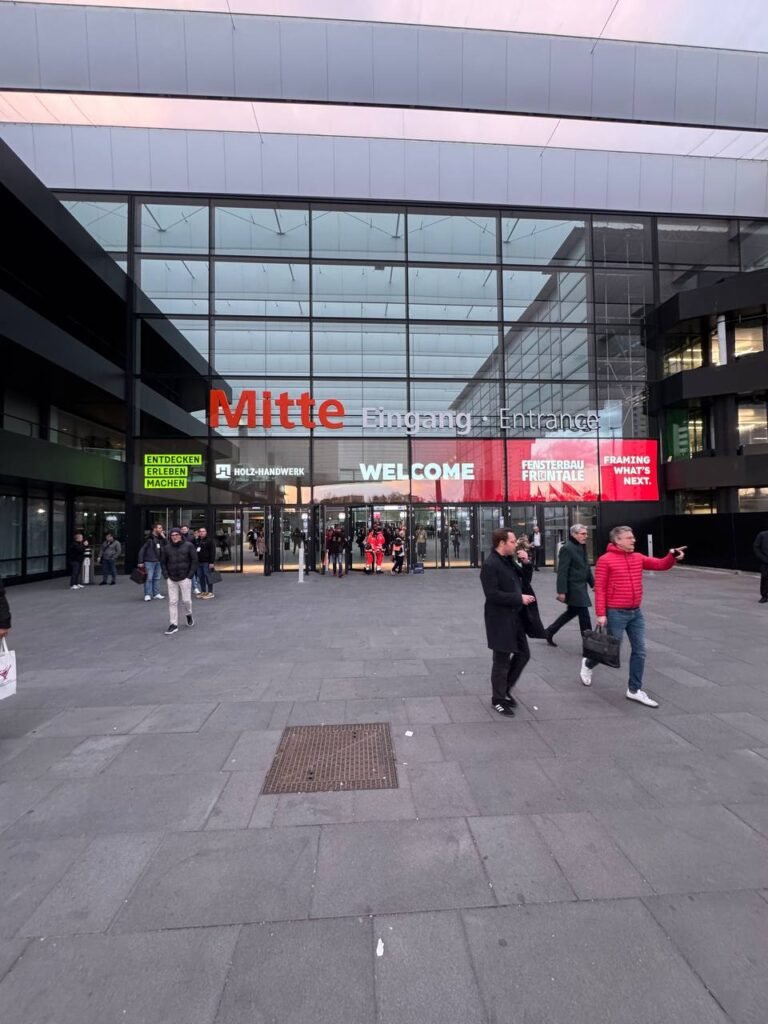
After visiting Fensterbau Frontale 2026, it becomes clear that the glazing market has advanced significantly, while the approach of most clients when choosing windows remains the same.
Today, it is impossible to achieve a high-quality result if windows are considered as a standalone product.
Modern solutions are always a system that includes:
the profile and glazing
installation and connection details
solar protection
security
acoustic comfort
If even one of these elements is chosen incorrectly, the entire system starts to perform worse.
❗ The main problem
In most cases:
windows are chosen based on price or external appearance
solutions are taken from different sources
there is no unified logic or centralized responsibility
As a result:
the project loses quality
problems arise during use
correction costs increase
💡 How it is solved
The only approach that truly works today is the comprehensive selection of solutions for a specific project.
When:
the architecture of the project is taken into account
the climate and location are analyzed
системы подбираются в соответствии с задачами, а не «в целом»
all responsibility is concentrated in the same hands
It is precisely this approach that makes it possible to achieve a result that meets expectations, without rework or compromises.